How much does it cost to open a gym in Australia
! Entrepreneur reviewing gym startup budget papers
Opening a gym in Australia costs between $45,000 for a small personal training studio and well over $1.
You've envisioned it: the buzzing studio floor, the calm recovery centre, the hum of happy clients. Opening your own wellness or fitness space in Australia is a huge dream. Then reality hits. The spreadsheets. The quotes. The sinking feeling as the initial budget estimate balloons past what you'd first imagined.

So, how much does it actually cost to open a gym or studio in Australia? Forget the glossy projections for a moment. We're talking about anything from $45,000 for a lean personal training studio right up to well over $1.5 million for a sprawling, full-service facility. The massive range comes down to three non-negotiable variables: the format you choose, your location, and the condition of the space you lease.
Break it down, and you'll typically see build-out and renovations gobble up 30-40% of your total budget, equipment another 25-35%, and working capital a critical 15-20%. Understanding these proportions before you sign a lease is the difference between a viable business plan and a funding crisis six months in.
The Main Cost Categories When Launching Your Studio
Opening a studio means navigating five distinct financial categories. Underestimating any one of them carries a real risk to your launch.
Build-Out and Renovations
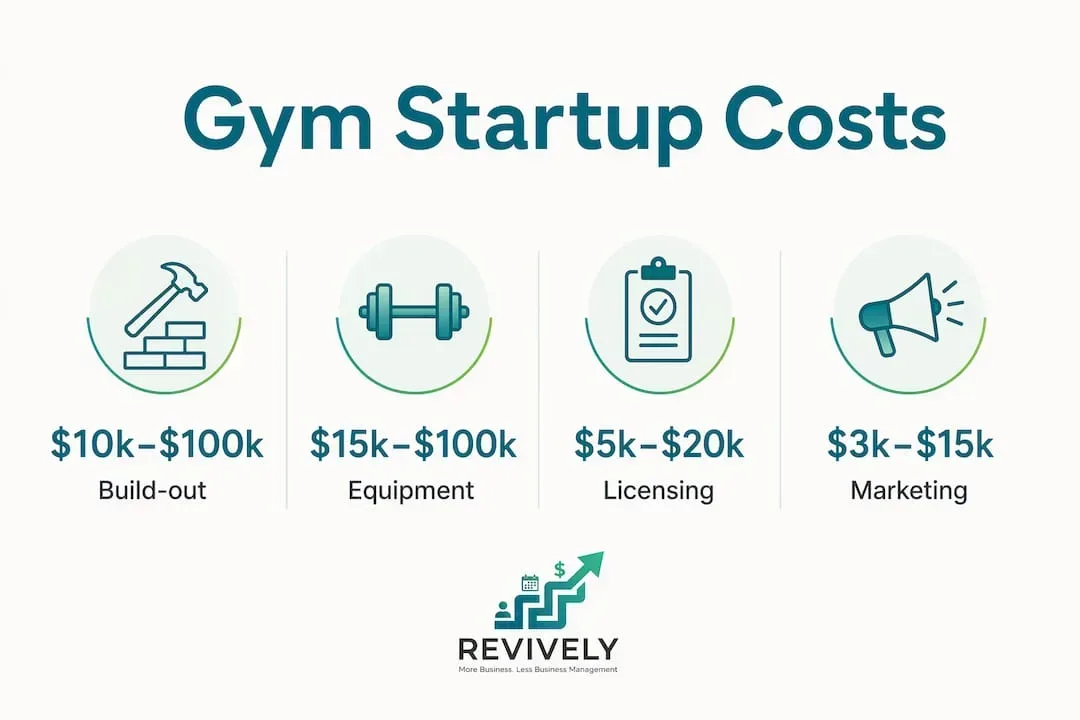
For most Australian studio owners, this is the single largest line item. The quality of your chosen location drives this cost dramatically. Found a move-in ready space? You might get away with $10,000 in fit-out work. But if you're looking at a raw shell needing all-new plumbing, electrical, and flooring, that cost can easily exceed $100,000.
Pro-tip: Negotiating a tenant improvement allowance from your landlord is one of the most effective ways to reduce this expense before you spend a single dollar. Think rent-free periods too - two to four weeks before opening allows fit-out without paying for a non-revenue-generating space.
Equipment
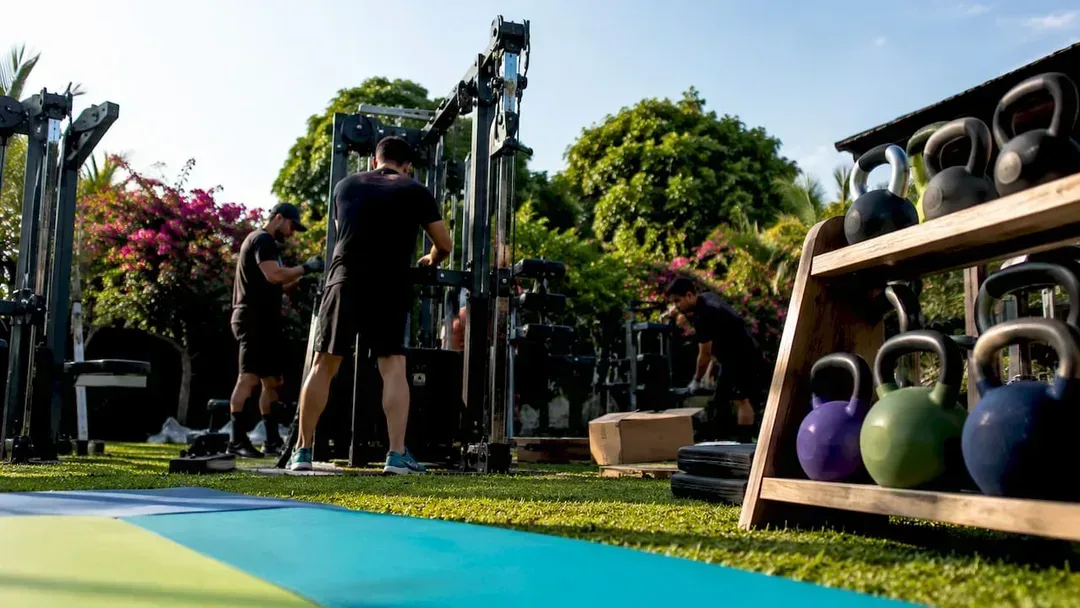
This varies enormously by your studio format. A personal training centre needs a modest selection of free weights, benches, and functional training gear. A full-service gym, however, demands treadmills, ellipticals, cable machines, and a complete weights floor. That difference in scope directly explains the vast cost gap between different studio types.
Licensing, Insurance, and Permits
These are non-negotiable opening expenses here in Australia. You'll need public liability insurance, your business registration (ABN), and any specific local council permits for your premises. Budget at least $3,000 - $5,000 for this category in your first year. Don't skimp here; compliance isn't optional.
Marketing and Branding
This is frequently underbudgeted. A professional logo, a functional website, eye-catching signage, and a strategic pre-opening social media campaign each carry real costs. Allocate a minimum of $5,000 - $10,000 for your launch marketing to make sure you're not opening to an empty room.
Working Capital
This is your lifeline. Working capital covers your operating expenses while you build your membership base. Most studio owners need at least three to six months of expenses held in reserve before they open their doors. This runway is crucial.
| Cost Category | Typical Range (AUD) |
|---|---|
| Build-out and renovations | $10,000 - $100,000+ |
| Equipment | $15,000 - $300,000+ |
| Licensing, insurance, and permits | $3,000 - $8,000 |
| Marketing and branding | $5,000 - $20,000 |
| Working capital reserve | $30,000 - $400,000+ |
How Costs Differ Between Studio Types and Sizes
Studio startup costs aren't one-size-fits-all. They vary significantly depending on your specific format:
- Personal training studios sit at the entry level, typically requiring $45,000 - $120,000 to open.
- Boutique studios (think yoga, Pilates, spin, or recovery centres) generally cost $120,000 - $280,000.
- CrossFit affiliates usually fall into the $80,000 - $180,000 range.
- Full-service gyms are the heavyweights, starting at $500,000 and easily exceeding $1.5 million.
The reason for these differences isn't just about square footage. Boutique studios, for example, invest heavily in interior aesthetics, sound systems, and lighting. Why? Because the elevated member experience justifies premium pricing. A $30 per class boutique Pilates studio needs a fit-out that feels worth $30. A budget gym simply doesn't carry that same expectation.
Traditional gyms, on the other hand, depend on large fleets of cardio equipment. This drives their equipment budgets far above boutique or specialty studios. Consider this: a single commercial treadmill can cost $4,000 - $8,000. Equip a 40-machine cardio floor, and that line item alone reaches $160,000 - $320,000.
| Gym/Studio Type | Typical Startup Cost (AUD) | Key Cost Driver |
|---|---|---|
| Personal training studio | $45,000 - $120,000 | Free weights and functional gear |
| Boutique studio (Yoga, Pilates, Spin) | $120,000 - $280,000 | Aesthetics, sound, and lighting |
| CrossFit affiliate | $80,000 - $180,000 | Rig, barbells, and specialised flooring |
| Full-service gym | $500,000 - $1,500,000+ | Cardio equipment and extensive build-out |
Want premium features? Adding a sauna, a dedicated recovery room, or a café to a full-service gym can easily tack on another $50,000 - $150,000 to your opening budget. Plan these additions carefully, only if your pricing model and target market genuinely support the investment.
The Ongoing Expenses New Studio Owners Often Miss
While startup costs get all the attention, it's your monthly operating costs where most new studio owners get caught out. Monthly burn rates before profitability typically range from $15,000 to $60,000, with mid-sized gyms averaging around $38,000. That figure often surprises founders who solely focus on the one-off startup expenses.
Your monthly expenses will include:
- Rent: Commercial studio leases in Australian capital cities can range from $4,000 to $25,000+ per month, depending on the suburb and floor space.
- Payroll: Even a lean operation with two or three staff members will spend $15,000 - $30,000 per month on wages, superannuation, and payroll tax.
- Utilities: Air conditioning, lighting, and hot water for a busy studio run higher than most commercial tenancies. Budget $1,500 - $4,000 per month.
- Software and systems: Your booking platform, payroll software, and accounting tools add $300 - $800 per month for a well-run operation.
- Marketing: Ongoing digital advertising and member retention campaigns typically cost $1,000 - $3,000 per month for a small to mid-sized studio.
This is why reserve capital is so critical. A CrossFit affiliate might need $30,000 - $80,000 in reserve. Full-service gyms could need up to $400,000 or more. The standard recommendation: have 3 to 6 months of operating expenses held in reserve before you open. This financial runway protects you during the slow membership ramp-up period that almost every new studio experiences.
Pro Tip: Build your cash flow model month by month for the first 12 months. Assume membership growth is slower than your most optimistic projection. If the numbers still work on this conservative scenario, your plan is solid.
Financing Options to Manage Your Startup Costs
Most studio owners fund their opening through a combination of sources, rather than relying on a single loan. Financing options typically include personal equity, equipment financing (often with 36-60 month terms), and business loans that usually require a deposit and a personal guarantee.
Practical financing strategies for Australian gym and studio owners include:
- Personal equity: Using your own savings reduces debt servicing costs and instils confidence in lenders. Most banks want to see 20-30% of the total project funded by the owner.
- Equipment financing: Spreading equipment costs over 36-60 months preserves cash for vital operating expenses. Many equipment suppliers offer in-house financing programs.
- Business loans: Australian banks and non-bank lenders offer secured and unsecured business loans. Be prepared with a detailed business plan and realistic revenue projections.
- Investor capital: A silent partner or a small group of investors can fund a significant portion of your build-out in exchange for equity or profit sharing.
- Pre-sale membership campaigns: Launching pre-sale campaigns two to three months before opening generates crucial early cash flow before your first member officially walks through the door. This strategy also validates demand and helps build a committed founding member base.
Remember, negotiating tenant improvement contributions from your landlord directly reduces the amount you need to borrow. If your landlord offers $30,000 in fit-out contributions, that's $30,000 less you need to finance yourself.
Key Takeaways
Opening a gym or studio in Australia demands a detailed budget covering build-out, equipment, reserves, and ongoing operating costs. Your total investment will range from $45,000 to well over $1.5 million depending on your chosen format and location.
| Point | Details |
|---|---|
| Startup cost range | Personal training studios start at $45,000; full-service gyms exceed $1.5 million. |
| Biggest budget item | Build-out and renovations consume 30-40% of the total startup budget. |
| Monthly burn rate | Mid-sized gyms average $38,000 per month before reaching profitability. |
| Reserve capital | Hold 3-6 months of operating expenses in reserve before opening day. |
| Pre-sale strategy | Launch membership pre-sales 2-3 months before opening to generate early cash flow. |
The Cost Mistake I See Most Often
I've spoken with dozens of aspiring gym and studio owners across Australia, and the pattern is consistent. They meticulously budget the fit-out. They carefully price the equipment. Then, they open their doors with three months of reserve capital, only to discover that membership growth takes six months, not three.
The first-year operating cost for a gym averages around $126,300 nationally, but that figure often masks the geographic reality. Sydney and Melbourne operators face rent and wage bills that can push first-year costs well above $200,000. Regional operators often get more breathing room, but they also contend with smaller addressable markets.
My honest advice? Choose your location based on lease quality and foot traffic data, not just the lowest rent. A cheaper space that needs $80,000 in renovations often costs more in the long run than a slightly pricier, move-in-ready tenancy. And never, ever underestimate how long it takes to truly fill a membership base. Budget for the slow scenario, not the optimistic one.
- Andreea*
How Revively Supports Australian Studio Operations From Day One
Getting your financials meticulously right before opening is only half the work. Once your doors are open, managing bookings, memberships, and cash flow efficiently is what truly determines if your hard-won margins hold.

Revively gives Australian fitness and wellness studio owners a single, unified platform to handle class scheduling, membership and pack management, and Xero-integrated reporting. We understand the local landscape. Client data, booking histories, and sensitive health intake forms are stored locally in Australia, fully complying with the Australian Privacy Principles (APPs) - a massive trust factor for local studios. Our system natively handles 10% GST calculations across casual classes, memberships, and multi-resource packages, automatically issuing legally compliant Australian Tax Invoices to your clients.
Furthermore, our Xero integration isn't just a basic sync tool. It's built for 100% legal tax compliance, with automated two-way mapping of tax codes, revenue accounts, and liabilities. This ensures your quarterly Business Activity Statements (BAS) are flawless and audit-proof, removing those manual spreadsheet errors that keep you up at night.
Automatic waitlist promotion fills cancelled spots without staff intervention, while Stripe-powered memberships process recurring payments reliably. Digital intake forms and foyer display boards keep your operation running smoothly, dramatically reducing administration overhead. For Australian studio owners who want clean financials, less time on admin, and complete peace of mind, Revively is well worth a close look.
FAQ
How much does it cost to open a gym in Australia?
Opening a gym or studio in Australia costs between $45,000 for a small personal training studio and over $1.5 million for a full-service facility. The format you choose and your specific location are the two biggest cost drivers.
What is the biggest expense when starting a gym?
Build-out and renovations are typically the largest single expense, consuming 30-40% of the total startup budget. The condition of your leased space determines whether this cost is $10,000 or well over $100,000.
How much working capital do I need to open a gym?
The standard recommendation is 3-6 months of operating expenses held in reserve before opening. For a mid-sized gym with a monthly burn rate of around $38,000, that means having $114,000 - $228,000 in reserve capital.
Can I open a gym with a small budget?
A personal training studio is the most accessible entry point, with startup costs starting from $45,000. Keeping the fit-out minimal, utilising equipment financing, and running a strong pre-sale campaign before opening all help significantly reduce the upfront cash requirement.
What financing options are available for gym startups in Australia?
Australian gym and studio owners typically use a combination of personal equity, equipment financing over 36-60 months, and business loans. Pre-sale membership campaigns are also an effective way to generate early cash flow that reduces the total amount you need to borrow.