
Avoid APP 11: Client Record Retention Checklist for Australian Studios
! Studio owner sorting business records
Most business, tax and super records need to stay on file for at least 5 years, employee time and wage records for at least 7 years, and personal information you no longer need must be destroyed or de-identified under APP 11.
It's 4 PM on a Tuesday. You've just finished teaching a double barre class, fielded three membership enquiries, and found a stray sock in the change rooms. Your inbox is overflowing, your phone is buzzing, and now, the thought of sorting through client intake forms, staff timesheets, and GST records for your end-of-quarter BAS looms large. "Keep everything," you tell yourself, "just in case." But here's the kicker: holding onto too much, for too long, without a clear purpose, can actually land your Australian studio in hot water.
We're talking about APP 11 - the Australian Privacy Principle that dictates when you must destroy or de-identify personal information you no longer need. Get it wrong, and you risk a compliance nightmare, not to mention a potential data breach. Get it right, and you safeguard your clients, your business, and your sanity.

Most business, tax and super records need to stay on file for at least 5 years, employee time and wage records for at least 7 years, and personal information you no longer need must be destroyed or de-identified under APP 11. The first practical step? A simple retention table, with a date set for your first review. Let's make that daunting task manageable.
The Short & Sharp Guide to Australian Studio Record Retention:
- Payroll & Wage Records: Keep for at least seven years, ready for Fair Work inspection. No excuses.
- Tax, GST & Super: Five years is the minimum from the later of the record's creation or transaction completion. Keep those ATO auditors happy.
- Client Personal & Health Info: Hold only if genuinely needed for ongoing purposes or legal reasons. Otherwise, destroy or de-identify it. Seriously.
- Security First: Encryption, access controls, and regular offsite backups are non-negotiable for audit-proof data.
- Purpose is Power: Building retention protocols into your digital systems streamlines compliance. But remember: holding records without a clear purpose increases legal risk more than deleting them early ever will.
Table of Contents
- The Records Every Aussie Studio Needs to Tame
- Knowing the Clock: How Long is "Long Enough" for Your Studio's Data?
- Beyond the Box: Securely Storing & Auditing Your Studio's Golden Nuggets
- Crafting Your Bulletproof Australian Studio Retention Policy
- The Real Compliance Trap: Why Holding On Too Long is Riskier
- Revively: Your Australian Co-Pilot for Effortless Compliance & Growth
- FAQ: Your Burning Record Retention Questions, Answered
- Sources
- Recommended Reads for Australian Studio Owners
The Records Every Aussie Studio Needs to Tame
Whether you run a spa, yoga studio, Pilates centre, or a vibrant dance school, you're juggling a mix of financial, employment, and sensitive client data. Each category lives under its own legal microscope. Sorting them out early makes building your retention policy a breeze, not a burden.
- Tax & GST Records (ATO): This is your bread and butter - sales records, invoices (including those crucial, legally compliant Australian Tax Invoices automatically generated with 10% GST for casual classes, memberships, and multi-resource packages), your Xero exports, and bank feed data. These fall squarely under the ATO's record-keeping rules, demanding a 5-year minimum for most transaction and reporting records. Get this right, and your quarterly BAS submissions are a non-issue.
- Payroll Records (Fair Work): Think payslips, timesheets, and superannuation records for every single staff member - full-time, part-time, casual instructors, the lot. The Fair Work Ombudsman mandates a 7-year retention period, insisting they must be legible and in English. No shortcuts here.
- Client Records (OAIC & APPs): This is where it gets truly sensitive. Intake forms, treatment notes, medical history, emergency contacts - any health or personal information collected at booking. Under the Australian Privacy Principles (APPs), this counts as sensitive information and requires tighter access controls than a simple name and phone number. This is precisely why Australian data residency is critical, ensuring client data is stored locally and securely, fully complying with APPs.
- Financial & Trust Records: Receipts, refunds, merchant settlement reports from your payment processor - all part of the financial puzzle.
- Professional-Service Records: Engagement letters, advice received, and any documents your bookkeeper or tax agent relied on when preparing your BAS. Remember, if you outsource, their obligation to keep proper client records under the Tax Practitioners Board runs alongside yours, not in place of it.
- Consent Records: Signed waivers, photo consent, and any sensitive information disclosures specifically tied to a client's visit. These are your legal shields.
Knowing the Clock: How Long is "Long Enough" for Your Studio's Data?
Two numbers form the bedrock of most Australian studio retention decisions, but crucially, the clock for each starts ticking differently.
- ATO Baseline: 5 Years. Most tax, GST, and superannuation records must be kept for at least 5 years. This period kicks off from the later of two dates: when the record was prepared or obtained, or when the related transaction was completed.
- Fair Work Baseline: 7 Years. Time and wages records, encompassing hours worked, pay rates, and leave balances, are non-negotiable for at least 7 years. Be ready to produce them on demand for a Fair Work Inspector.
- Litigation or Insurance Holds: Has a client made a claim? Are you embroiled in a dispute? Keep every related record until the matter is fully and irrevocably resolved, statutory minimums be damned.
- ASIC and Corporations Act Obligations: If your studio operates as a company, its financial records generally require longer retention than sole trader records. Double-check your entity type against the Corporations Act requirements.
- Commonwealth and Archival Rules: While the Archives Act primarily applies to Commonwealth records, it serves as a useful reminder: some record categories are simply never meant for routine destruction.
- Minors & Sensitive Health Records: For clients who were minors at the time of treatment, or where records contain ongoing health information, a longer, well-documented retention period is often the safest and most ethical choice.
The Golden Rule: Assign a specific retention trigger date to each record type, not a vague "keep everything" policy. Always note the reason whenever you extend beyond the statutory minimum.
Here's a quick overview of common studio record types and their typical retention periods:
| Record Type | Regulatory Body | Minimum Retention Period | Purpose / Notes |
|---|---|---|---|
| Tax & GST Invoices | ATO | 5 years | Proof of income/expenses, BAS accuracy, audit trail |
| Xero Exports | ATO | 5 years | Digital financial record, GST compliance |
| Payroll & Timesheets | Fair Work Ombudsman | 7 years | Employee entitlements, dispute resolution |
| Superannuation Records | ATO / Fair Work Ombudsman | 5-7 years | Compliance with super obligations |
| Client Intake Forms | OAIC (Privacy Act / APPs) | Purpose-based | Basis for service delivery, health/safety, consent |
| Client Health Notes | OAIC (Privacy Act / APPs) | Purpose-based | Ongoing care, liability; often longer for minors/injury |
| Signed Waivers/Consents | Legal / Insurance | Ongoing / Dispute life | Proof of consent, liability protection |
| Payment Processor Reports | ATO | 5 years | Financial reconciliation, proof of transactions |
Beyond the Box: Securely Storing & Auditing Your Studio's Golden Nuggets
Meeting a retention period means nothing if the records aren't actually usable when someone comes knocking - be it the ATO, Fair Work, or a client exercising their privacy rights. This is where secure data handling and Australian data residency truly shine.
- English & Exportable: Auditors expect standard, accessible formats like CSV, XLSX, or PDF. Not a proprietary format only one piece of software can open.
- Encryption & Access Controls: Strictly limit who can view sensitive health notes or payroll data. Maintain an auditable record of who has access and why. Remember, client data, booking histories, and sensitive health intake forms stored with Revively are locally in Australia, fully complying with Australian Privacy Principles (APPs).
- Maintain Audit Logs: Every edit or correction to a record must leave a trace. Undetectable changes severely undermine a record's evidentiary value.
- Offsite Backups & Restore Tests: A backup you've never tried to restore from is not a reliable backup. Test your restore process regularly.
- Avoid Proprietary Lock-in: Before committing to any cloud system, thoroughly test the export process for your data, backups, and logs. The ATO expects digital records to be secure and retrievable on request.
Pro Tip: Run a quarterly export of your client and transaction data and store an offline copy for the statutory period. This way, an audit request never depends on a live system staying online.
This isn't just "good practice"; it's critical. The Office of the Australian Information Commissioner (OAIC) considers an entity to be "holding" information if it has the right to deal with that record, even if a third party stores it. Outsourcing storage to a booking platform does not outsource your APP 11 obligations. Your data. Your responsibility.
Crafting Your Bulletproof Australian Studio Retention Policy
A truly effective retention policy is a concise, working document, not a legal tome. It assigns each record category a retention period, a lawful basis, and a clear owner. No guesswork needed.
- Categorise & Assign Periods: Tax records for 5 years, payroll for 7 years, health information reviewed against professional guidelines for your specific sector.
- Specify Format & Location: Is it electronic or paper? Where is it stored? Crucially, who has the authority to export it?
- Name a Responsible Owner: Designate one person to check the retention table each quarter. This isn't a task that should drift between staff.
- Define Destruction Method: Secure deletion for digital files, shredding for paper. Log the event to prove it happened.
- Set Review & Legal-Hold Triggers: Establish a date to revisit each category and a clear process to pause deletion immediately if a dispute arises.
Why regular reviews are vital: The OAIC's own guidance highlights that holding personal information indefinitely increases an organisation's breach liability. A scheduled review genuinely lowers your exposure, rather than just tidying up files.
A simple table header is a great starting point: Category | Examples | Retention Period | Owner | Disposal Method | Last Review Date.
The Real Compliance Trap: Why Holding On Too Long is Riskier
Studio owners often worry about deleting a record they might need later. But under APP 11, the bigger compliance risk is precisely that: holding personal information "just in case" with no documented, lawful purpose. A clear, purpose-based retention schedule offers far greater protection than an indefinite, sprawling archive.
Start with the records carrying the highest risk if mishandled: client health and injury notes, then payroll. If you're ever unsure whether a legal hold applies - perhaps for a client dispute, an insurance claim, or a tribunal matter - seek specific advice from a qualified lawyer or tax agent. And importantly, keep a clear note of that advice with the relevant record.
Revively: Your Australian Co-Pilot for Effortless Compliance & Growth
Imagine a unified cloud command centre (CRM + multi-resource scheduler) that effortlessly handles your unique Australian compliance needs, freeing you to focus on what you do best. That's Revively.
We built Revively so Australian wellness and fitness studios can centralise the records this guide covers, eliminating the chaos of chasing them across disparate spreadsheets, paper files, and outdated booking software.
Here's how Revively keeps your studio audit-ready and compliant, without breaking a sweat:
- Australian Data Residency: Your client data, booking histories, and sensitive health intake forms are stored locally in Australia, fully complying with the Australian Privacy Principles (APPs). Sleep easy knowing your data is home.
- Flawless GST & Tax Invoice Handling: Revively natively handles 10% GST calculations across casual classes, memberships, and multi-resource packages. It automatically issues legally compliant Australian Tax Invoices to your clients, every single time. No more manual calculations, no more chasing outdated templates.
- 100% Legal Xero Integration for BAS Accuracy: Our two-way Xero integration is a game-changer for tax compliance. It offers automated two-way mapping of tax codes, revenue accounts, and liabilities, ensuring your quarterly Business Activity Statements (BAS) are flawless and audit-proof. Say goodbye to manual spreadsheet errors and welcome stress-free financial reporting.
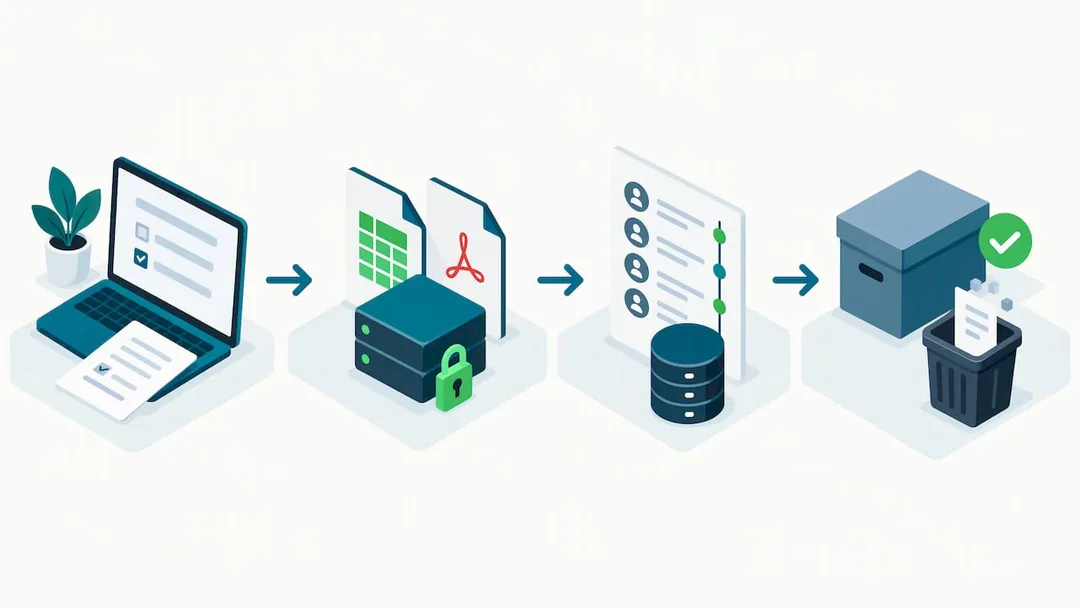
Digital intake forms capture consent and health notes at booking, exportable client and transaction data keeps your retention table current, and our deep Xero integration keeps tax and GST records reconciled without duplicate entry.
- Review our security and trust page against your own retention checklist. You'll find details on our access controls, backup practices, and commitment to data integrity.
- Map your retention categories to Revively's class scheduling and membership records before migrating.
- Compare plans on our pricing page, starting from $39 AUD per month on the Solo plan, making professional, compliant studio management accessible for everyone.

If your studio needs custom export or retention workflows beyond what any off-the-shelf platform offers, Subscription Platform Developers Australia can scope bespoke development work.
Disclaimer: This article provides general information and guidance only. It is not a substitute for professional legal or tax advice. Always consult a qualified legal professional or tax agent about your own specific circumstances before acting on anything contained here.
FAQ: Your Burning Record Retention Questions, Answered
What records need to be kept for 7 years in Australia?
In Australia, employee time and wages records - including hours worked, pay rates, leave balances, and superannuation contributions - must be kept for at least 7 years under Fair Work record-keeping rules. These records must be legible, in English, and readily available for inspection upon request by a Fair Work Inspector.
How long do I need to keep client records for my Australian studio?
The retention period for client records varies significantly by type. Most tax and transaction records require 5 years of retention. However, personal information (such as basic contact details) with no ongoing purpose should be destroyed or de-identified under APP 11, unless another Australian law explicitly requires longer retention. For sensitive client notes, particularly health or injury-related information, a longer, clearly documented retention period is often the safer and more professional choice.
What is the 7-year retention policy, and how does it affect my studio?
The "7-year retention policy" refers specifically to the Fair Work Ombudsman's requirement for employers. It dictates that you must keep accurate time and wages records for your employees for a minimum of 7 years. For your studio, this means meticulously maintaining records like timesheets, pay slips, and leave accruals. Failure to produce these records or provide accurate ones can lead to significant infringement notices from Fair Work.
Do I have to destroy client data once the retention period ends?
Yes. Under Australian Privacy Principle (APP) 11.2, you are legally obliged to destroy or de-identify personal information once it is no longer needed for the specific purpose it was collected, unless another Australian law requires you to retain it. To demonstrate compliance with this OAIC obligation, it's best practice to maintain an auditable log detailing what data was deleted, when, and by what secure method. This proactive approach not only minimises legal risk but also upholds client trust.
Sources
- Records you need to keep | Australian Taxation Office
- Record-keeping | Fair Work Ombudsman
- Chapter 11: Australian Privacy Principle 11 - Security of personal information | OAIC
- Obligation to keep proper client records | Tax Practitioners Board
- Corporations Act | Australian Government Federal Register of Legislation
- Archives Act | Australian Government Federal Register of Legislation
Recommended Reads for Australian Studio Owners
Ready to streamline more than just your record retention? Dive into these related articles to further optimise your studio's operations and compliance:
- Taming the Paper Dragon: Your Australian Studio's Guide to Bulletproof Massage Intake Forms
- Ditch the Chaos: The Definitive Guide to Australian Studio Management Software (2026)
- Taming the Chaos: Why Your Australian Studio Needs Unified Management Software (and How to Spot the Pretenders)
- Drowning in Studio Admin? How Australian Studios are Mastering Memberships (and Their Weekends)