
Room and Equipment Scheduling for Studios: A Practical Guide
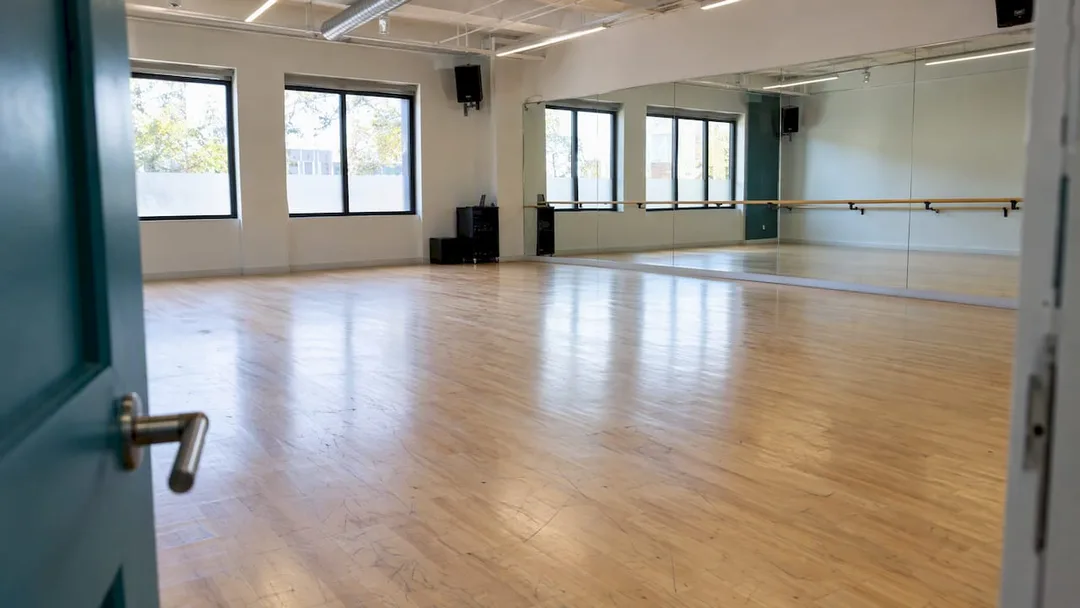
! Dance studio floor, mirrors and sound system
Room and equipment scheduling means treating every room, reformer, sauna and instructor as a bookable resource, so one session can never claim something another session already holds.
Picture this: it's 7 AM, your first client for a private Pilates session is already at reception, but the reformer room is somehow double-booked by a casual hire. Meanwhile, your yoga instructor is waiting for a studio that's still being cleaned from the last class, and your front desk is frantically cross-referencing three different calendars. Sound familiar?
For Australian wellness and fitness studios - be it a bustling yoga studio, a serene spa, a high-energy Pilates reformer centre, or a vibrant dance school - managing rooms, equipment, and staff isn't just about filling slots. It's about orchestrating every single moving part into a seamless operation. Every room, reformer, sauna, treatment bed, and even your star instructor needs to be treated as a bookable resource. The goal? To guarantee one session never, ever claims something another session already holds.
This isn't rocket science, but it does demand a strategy that covers: pinpoint accurate availability, sensible class capacity limits, essential cleaning and changeover buffers between sessions, and critically, one unified calendar that everyone - staff, clients, and your bookkeeper - can trust.
This guide isn't just about "how-to." It's about building a bulletproof system designed for the unique demands of the Australian market, ensuring you stay compliant, profitable, and sane.
The Gist: Ditching the Daily Chaos
Running a studio is a juggle, not a stroll. Here's what it boils down to:
- Resources as a Package: When a client books, the room, the equipment, and the instructor should be booked together. If even one piece is missing, that slot simply isn't available.
- Smart Class Limits: Base your class caps on the tightest constraint - whether that's floor space, the number of installed reformers, or your coach's ability to safely supervise.
- Invisible Buffers: Embed cleaning and changeover times directly into your resource schedule, not as an afterthought on your timetable. It's about respecting the reality of your operations.
- Crystal Clear Rules: Document your booking, cancellation, and hire policies once. Display them prominently at checkout to head off disputes before they start.
- One Source of Truth: Unify your classes, private sessions, and room hires into a single scheduler. This is the only way to guarantee availability is always accurate.
What Are You Actually Scheduling? (Hint: It's More Than Just "Time")
Let's be real. Your studio isn't just selling hours on a clock. A dance studio juggles specific rooms with sprung floors, mirrors, and sound systems, plus the availability of specialist teachers. A Pilates studio manages a fleet of reformers, specific props, and a limited number of private session slots. A recovery centre or spa has treatment rooms, saunas, dedicated therapists, and critical turnover time for sanitisation.
The headache begins when each of these lives in its own silo: a battered paper diary for rooms, a chaotic spreadsheet for equipment, and a separate booking app for classes. This fragmented approach is a breeding ground for problems: a private lesson booked in a room already taken by a hirer, a group class selling ten spots when you only have eight reformers, or a therapist showing up to a treatment room still in use. We've all seen it. Our deep dive into why shared calendars stop working for Australian studios spells out this nightmare scenario in vivid detail.
To get started, take a moment to list every single resource in your studio that could potentially block a booking. For each, jot down:
- How many you have (e.g., 3 treatment rooms, 12 reformers, 2 saunas).
- Which sessions absolutely require it.
- How long it needs to be unavailable after use (for cleaning, resetting).
- Who can lead or run a session within it (i.e., qualified staff).
This simple inventory becomes the foundational rulebook for your entire scheduling system.
Stop Double Bookings at the Source (No More Awkward Explanations)
Double bookings are the ultimate operational cringe. They happen when two different bookings can claim the same resource at the same time, almost always because availability is being checked in multiple places. The fix is structural: one system holds the master calendar, and every single booking pathway - front desk, online portal, phone call - writes directly to it.
To make this rock-solid, embed these core principles:
- Bundled Resources: A single booking should lock down several resources. For example, a 60-minute massage books the treatment room, the therapist, and, if applicable, the sauna. If any of those components are unavailable, the entire slot simply won't appear as bookable.
- Recurring Class Reservations: Your weekly Tuesday 9 AM Vinyasa class shouldn't just exist on a timetable; it should block the studio room for that time, every single week. This prevents a one-off private session from accidentally overriding it.
- Integrated Hires: Room hire requests that live in email threads or separate paper diaries are the number one cause of clashes. Bring them into your main scheduler.
- System-First Changes: If an instructor needs to swap rooms, that change must be made in the system, not scribbled on a whiteboard. The system is your single source of truth.
Our multi-resource booking guide for studios and spas details how this translates into smooth daily operations.
Build in Changeover & Cleaning Time (Because Reality Isn't a Tightly Packed Grid)
On paper, back-to-back sessions look like peak efficiency. In practice? They often fall apart. Mats need wiping down, treatment rooms need meticulous turning over, and the next class needs to walk in without a queue forming at the door. Rushing this breeds stress, client complaints, and potential compliance issues.
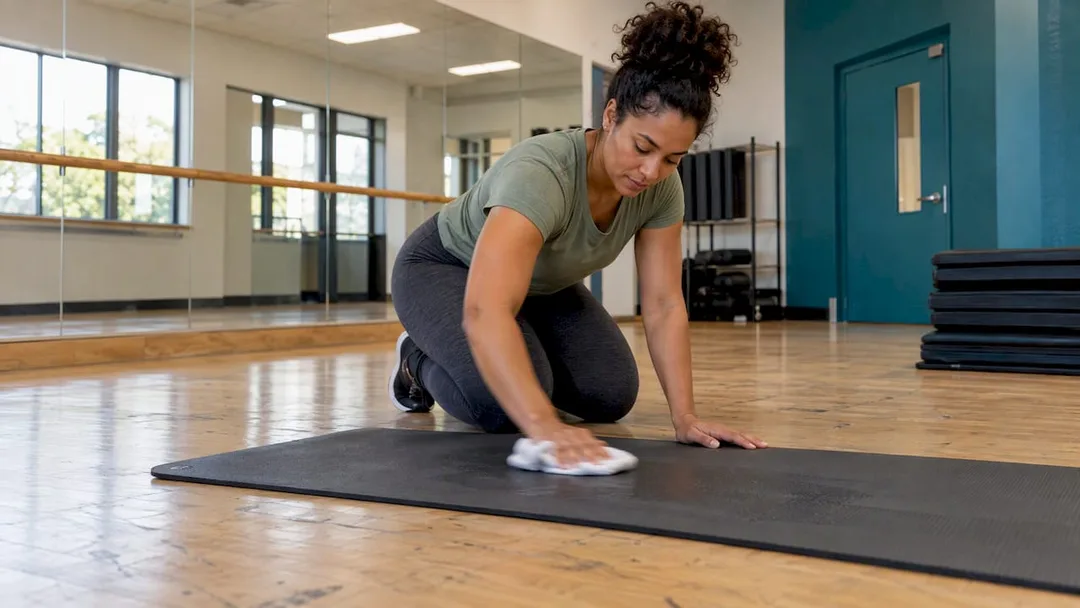
Just look at typical Australian studio hire terms. Many, like this example from an Australian dance studio, explicitly require hirers to wipe down used equipment at the end of a session, leave the venue as they found it, and maintain an attendee register. These aren't optional niceties; they are tasks that consume minutes, and those minutes must be accounted for in your schedule.
The smartest approach? Attach a buffer directly to the resource itself. A treatment room automatically has a 15-minute turnover. A reformer room gets a 10-minute reset. Every booking then inherently respects this buffer. Nobody has to manually remember to leave a gap, and your team stays on schedule. Start with realistic buffer lengths, then fine-tune them after a few weeks of real-world use.
Set Class Caps by the Tightest Limit (Not Just a Wild Guess)
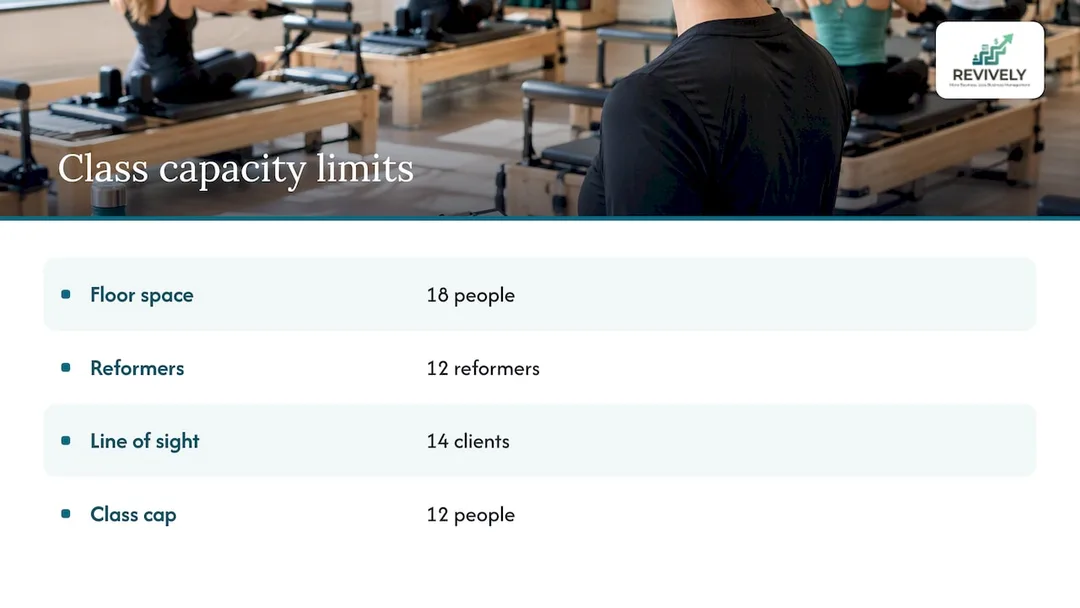
Your class capacity isn't a number you pull out of thin air or based solely on demand. It's determined by the smallest of several physical limits. As Verve Fitness wisely advises, set caps by the smallest of your available floor space, the count of essential equipment, and your coach's line of sight.
Consider bike or reformer studios: their cap is fixed by the number of installed stations. For functional or strength group training, the same source suggests allowing roughly 3 to 4 square metres of usable space per participant.
Here's a practical example:
Your studio room could physically fit 18 people based on floor space.
You own 12 reformers.
Your instructor can effectively supervise 14 clients from the front.
Your class cap is 12. Simple.
Beyond comfort, safety is paramount. AUSactive's guidance for fitness businesses highlights the need for safe access, non-slip floor finishes, and secure storage of loose weights to prevent trip hazards and blocked fire exits. They also recommend regular safety audits and meticulous logs of accidents and risks. When scheduling equipment, always consider its placement during a session, not just whether it's technically "free."
Write the Booking, Cancellation, and Hire Rules (And Stick to Them)
Scheduling systems crumble fastest when the rules are ambiguous. Don't leave room for interpretation. Decide these policies once, publish them clearly, and make them easily accessible:
- Booking Window: How far in advance can clients book? When does a class cut-off for new bookings?
- Late Cancellation: What's the cut-off point? What happens to a client's class pack credit or membership allowance if they cancel late or no-show?
- Waitlists: Does a freed spot automatically go to the next person? How are they notified?
- Room Hire: What are the non-negotiables for hirers? Think footwear requirements, expected room condition on exit, and crucially, payment timing.
Looking at real-world examples can be helpful. One Australian studio, for instance, requires payment at the time of booking and offers no refunds on cancellations. While your policies might be more flexible, the core principle remains: state it clearly where the booking is made, not after a dispute arises. Should you ever need to terminate a hire agreement or contract, business.gov.au advises that contracts can end by mutual written agreement or due to a serious breach of essential obligations, always recommending legal advice in such situations.
What to Demand from Your Studio Scheduling Software
Choosing the right platform is pivotal. Your software shouldn't just manage bookings; it should empower your entire studio operation, especially here in Australia. Here's what to look for:
| Need | What to Look For |
|---|---|
| Multi-Resource Booking | Can it bundle rooms, staff, and equipment together for a single booking, ensuring all components are available? |
| Automated Changeover Time | Configurable buffers set per room or resource that automatically factor into availability, no manual fuss. |
| Dynamic Group Classes | Supports recurring timetables, precise class caps, and automatic waitlist promotion when spots free up. |
| Seamless Private Sessions | Displays instructor and room availability accurately, respecting existing group bookings and buffers. |
| Branded Client Access | Professional, easy-to-use online booking portal that reflects your brand, integrated with secure payment processing. |
| Studio Visibility | Options for display boards or foyer screens showing today's classes and available resources, keeping clients informed. |
| Australian Financial Compliance | Natively handles 10% GST calculations across all services, issuing legally compliant Australian Tax Invoices. Flawless, two-way Xero integration for automated mapping of tax codes, revenue accounts, and liabilities, ensuring 100% accurate BAS statements and audit-proof financial records. |
| Scalability & Data Residency | Supports additional locations and staff without requiring a whole new system. Crucially, guarantees Australian data residency, with all client data, booking histories, and sensitive health intake forms stored locally, fully complying with Australian Privacy Principles (APPs). |
| Robust Reporting & Analytics | Provides insights into resource utilisation, peak times, and revenue per resource, helping you optimise your operations. |
Generic project management tools might seem tempting, with many roundups like this one for fitness studios showcasing various options. But the ultimate test for your studio is simple: Can it hold a specific room, a reformer, and a particular teacher on one single booking, and can clients book it themselves with all Australian compliance boxes ticked? If not, you'll be stuck manually rebuilding rules and spreadsheets, exactly what you're trying to escape.
If you're still weighing your broader options for studio management, our comprehensive guide to choosing studio membership software outlines the essential criteria specifically for Australian studios.
Revively's View: One Dashboard, Zero Headaches
We built Revively because we observed a recurring pattern in Australian studios: a booking app for classes, a separate spreadsheet for rooms, another tool for payments, and a bookkeeper left to untangle the mess. Every additional tool is another potential point of failure where availability can conflict, leading to double bookings and lost revenue.
Our philosophy is simple: room and equipment scheduling isn't a separate chore; it's how your entire timetable should function. When a sauna, a treatment room, and a therapist are booked cohesively, with essential cleaning buffers automatically attached, your schedule remains honest and reliable without constant manual oversight. When a class fills up, the next person on the waitlist moves up automatically. And critically, when money comes in, it flows directly to Xero with GST handled impeccably for Australian requirements, ensuring your books are always audit-ready.
Australian Compliance Mandate: At Revively, we don't just "support" Australian studios; we're built for them. We guarantee Australian data residency for all sensitive client and business information, upholding the strict Australian Privacy Principles (APPs). Our system ensures flawless 10% GST calculations and automatically generates legally compliant Australian Tax Invoices. Plus, our 100% legal Xero integration provides automated, two-way mapping of tax codes, revenue accounts, and liabilities, making your quarterly BAS statements accurate and truly audit-proof - no more manual spreadsheet errors, just peace of mind.
That's the core idea behind Revively - a single, unified cloud command centre for spas, yoga, Pilates, recovery, and dance studios. It's designed so your front desk, your instructors, and your clients all operate from the exact same, trustworthy picture. Our guide on multi-resource scheduling and staying BAS-ready further explores how seamlessly scheduling integrates with your financial compliance.
- Andreea, Co-founder of Revively*
Rolling Out Your New System Without the Disruption
You don't need to overhaul everything in one chaotic weekend. A phased approach minimises disruption:
- Map Your Resources: List every room, piece of equipment, and staff member that's bookable. Define the essential buffer time each needs.
- Enter Your Recurring Timetable First: Your fixed, regular classes are the anchors of your calendar. Get them in the system first.
- Add Private Sessions and Hires: These are often more dynamic and will fill the gaps around your core timetable.
- Publish the Rules: Make your cancellation policies and hire terms prominent on your booking page and studio website.
- Communicate with Staff and Clients: Empower instructors with one reliable place to check their daily schedule. Inform clients that online booking is now the fastest, most reliable way to secure their spot.
- Review and Optimise After a Month: Use real-world data to adjust class caps and buffers. What actually happened versus what you planned?
For studios heavily reliant on one-to-one work, delve deeper into our notes on private session scheduling for Australian studios.
Try Revively on Your Own Timetable
Ready to ditch the scheduling circus for good? Revively offers flexible subscription plans tailored for Australian studios. From Solo at $39 per month, to Growth at $99 per month, and Pro at $199 per month, with advantageous annual options available on our pricing page. Expanding? Additional locations are $79 per month each, and extra bookable staff seats are just $15 per month per seat.
You can set up your rooms, equipment, buffers, and even your entire timetable on a free trial. Experience firsthand how seamlessly Revively holds your schedule together, keeping you compliant and calm.
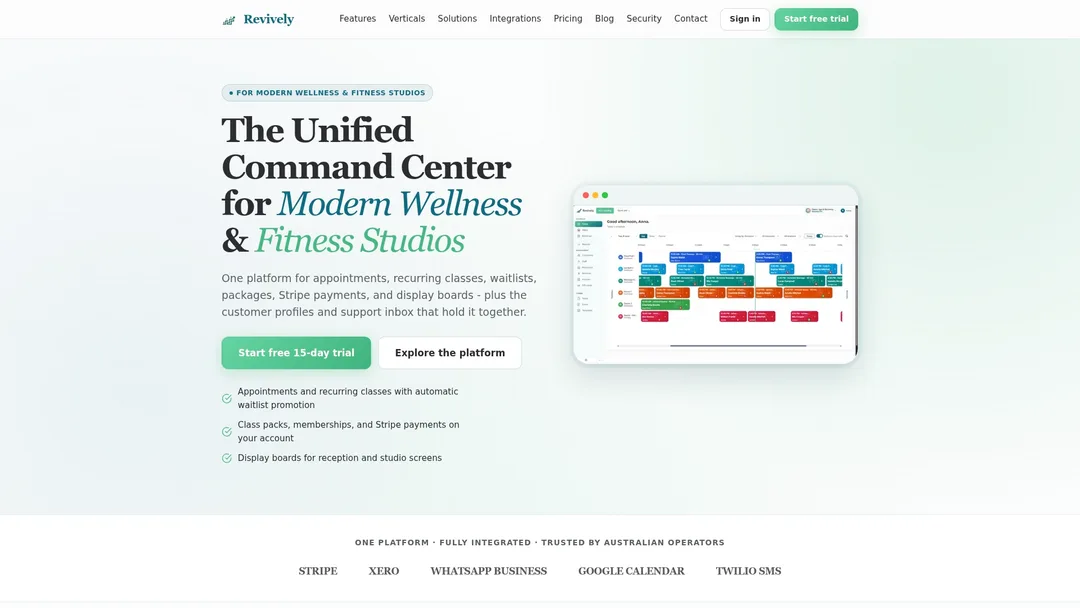
Explore our plans on the pricing page, or simply start from the Revively homepage and see the difference a purpose-built Australian solution makes.
Your Burning Questions Answered
How do I stop two classes booking the same room?
Unify your entire scheduling. Put every room into one master calendar and configure recurring classes to reserve their specific room every week. Ensure all bookings - including casual hires and private sessions - route through this same system. If a room is taken, the booking should simply not be confirmable.
How long should the gap between sessions be?
Base it on the actual tasks required. Wiping equipment, resetting mats, or thoroughly turning over a treatment room all take measurable time. Set this buffer directly on the room or resource itself within your software, then monitor and adjust after a few weeks of real operational use.
How do I decide how many people can join a class?
Identify your tightest physical limit: the usable floor space, the number of installed equipment pieces (like reformers or spin bikes), or the maximum number of clients your instructor can safely supervise. The smallest of these numbers is your ideal class capacity.
Do I need separate software for equipment and rooms?
Absolutely not, and in fact, separate tools are often the root of the problem. Opt for a single, integrated system that can bundle multiple resources (room, equipment, and instructor) into one booking. This holistic approach prevents the mismatches and double bookings that fragmented systems inevitably create.
Sources & Further Reading
- Gym Class Timetable Design That Fills Classes, Verve Fitness
- Planning and Building Regulation for Fitness Businesses, AUSactive
- Studio Hire, Circle Studios
- Studio Hire, Studio 24 Dance
- End a contract, business.gov.au
- Project management tools for fitness studios
More Insights from Revively
- Stop the Scheduling Chaos: How Australian Studios Can Master Multi-Resource Scheduling (and Stay BAS-Ready)
- Stop the Scheduling Circus: A Practical Guide to Multi-Resource Booking for Australian Studios & Spas
- Private Session Scheduling for Australian Studios: Taming the Chaos
- Stop the Studio Mayhem: How to Really Reduce Double Bookings (Without More Admin Headaches)