
6 sqm Rule: Class Capacity Management for Safer Studios
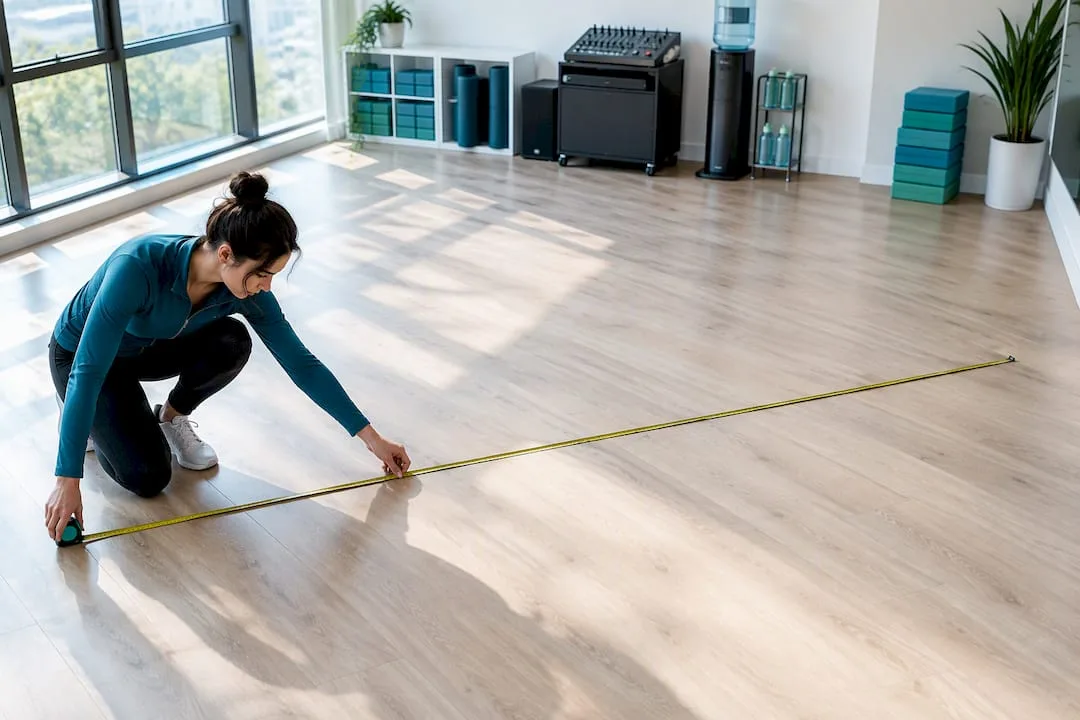
! Measuring usable floor area in movement studio
Class capacity management means setting a maximum headcount for each class based on floor space, ventilation and movement intensity, then enforcing it through bookings, waitlists and staff rules.
You know the feeling. It's 5:58 PM. Three clients are hovering at reception, two are frantically trying to book a reformer class on their phone, and the evening yoga session is about to kick off. Suddenly, you realise you're one mat short, or worse, one body too many for the room. You're juggling bookings, waitlists, cleaning schedules, and the nagging worry that you've packed a class just a little too tightly.
This isn't just about comfort; it's about safety, compliance, and your studio's reputation. In Australia, managing class capacity isn't a suggestion - it's a critical work health and safety (WHS) control, especially in movement-intensive environments like wellness, fitness, and dance studios. And it's far more nuanced than just counting heads.
At its core, class capacity management means setting a maximum headcount for each class. This isn't a random guess; it's a carefully calculated figure based on your floor space, ventilation, the intensity of movement, and the specific equipment in play. Then, it's about rigorously enforcing that number through your booking system, waitlist rules, and staff protocols.
A solid rule of thumb, backed by Ausdance, is to allow at least 6 square metres per participant. Aim for 9 sqm where possible, and be prepared to reduce that number further if your ventilation can't deliver the recommended range of air changes per hour for studios used intensively. Without clear scheduling controls and ironclad waitlist rules, those numbers are just figures on paper - they don't actually protect anyone.
Your Capacity Checklist: Setting Safe Limits Now
Before your next timetable review, dedicate twenty minutes per room to walk through this checklist. It's the fastest way to identify a capacity setting that might have quietly crept too high.
- Measure Usable Floor Area: This isn't just the room's advertised size. Subtract anything fixed - barres, mirrors, sound equipment, water stations, storage, even a reception desk. Only the clear, unobstructed space counts.
- Apply Ausdance Guidelines: Start with 6 square metres per person as your absolute floor. Aim for 9 square metres as the target for most dynamic movement classes. For lower-intensity styles, you might adjust down, but always err on the side of caution.
- Verify Ventilation: This is your primary override. If the room cannot achieve a healthy air change rate, you must drop the headcount, regardless of how much floor space you have. Stale, uncirculated air is a significant safety risk.
- Configure Your Booking System: Set a hard cap for each class that precisely matches your calculated safe number. Implement automatic waitlist promotion and a clear cancellation cut-off.
- Factor in Buffer Time: Build a non-negotiable cleaning and air turnover buffer (typically 10-15 minutes) between back-to-back classes in the same room.
Pro Tip: Don't treat this as a once-a-year task. Rerunning this checklist every time you reconfigure a room or add new equipment is crucial. A new weight rack or speaker stand can silently shrink your usable area by a square metre or more.
Calculating Your Studio's Safe Class Capacity
Let's dive into the maths that actually matters. Forget the number on your lease agreement. A studio advertised as 60 square metres might only offer 52 square metres of clear, usable floor space once all the fixed elements are accounted for. That 52 square metres is your magic number for division.
Ausdance provides two key benchmarks for movement studios:
- 6 square metres per participant: Your absolute safety minimum.
- 9 square metres per participant: The ideal target for most dynamic or intensive movement classes.
Using our 52 square metre example:
- At the 6 sqm minimum, you're looking at roughly 8 to 9 students.
- At the 9 sqm ideal, that drops to around 5 to 6 students.
For very low-intensity, social styles like beginner salsa or seated meditation, you might safely operate closer to 4 square metres per person, pushing that 52 sqm room to around 13 students. However, this relies heavily on your ventilation capacity and the nature of movement.

Crucially, ventilation is the variable that overrides all other arithmetic. If your HVAC system or natural airflow cannot meet the recommended air change rates for intensively used spaces, the solution is straightforward: fewer bodies in the room. No amount of clever floor space calculation can compensate for poor air quality.
Pro Tip: See ventilation as a non-negotiable input, not an afterthought. A room that looks spacious on paper can still be unsafe for a jump-heavy class if the air isn't refreshing quickly enough. Prioritise air quality over maximum headcounts.
From Floor Plan to Front Desk: Enforcing Capacity with Booking & Waitlist Rules
A capacity figure provides zero protection until it's hardwired into how clients actually book. This means transforming that number from your floor plan into automatic rules your studio management system enforces, consistently, without a staff member ever needing to remember a manual check.
Building Automated Booking Controls
- Set a Firm Cap: Implement a hard booking cap on every class that aligns with your calculated safe number, not the room's theoretical maximum. No exceptions.
- Separate Trial Spots: Designate a small number of trial or intro-offer spots that don't eat into your core capacity. This prevents casual visitors from unexpectedly pushing a busy class over its limit.
- Prioritise Members: Give your loyal members and class-pack holders booking priority when a class is nearing its cap.
- Smart Waitlist Logic:
- Automated Promotion: Ensure your waitlist automatically promotes clients in the precise order they joined as spots open up.
- Auto-Confirm Window: Implement a tight, automated confirmation window (e.g., 15-30 minutes). If a client doesn't confirm in time, the spot automatically passes to the next person. No manual chasing required.
- Instant Notifications: Send waitlist promotion notifications via SMS or app push, not just email. Spots move fast, and timely alerts are critical for filling cancellations.
- Stagger Arrivals/Departures: If you have multiple rooms sharing an entry, stagger class start and finish times. This avoids 30 people converging on reception or the foyer at once, easing congestion and improving flow.
- Cancellation Windows Matter: Link your cancellation policy to your capacity buffer. A 12-hour cancellation window for a class with a two-person waitlist gives you a realistic chance to safely re-fill that spot.
Pro Tip: A waitlist that demands manual staff promotion will always lag behind demand. Automated promotion with a concise confirmation window is the only way to keep your actual attendance consistently aligned with your safe capacity, class after class, freeing up your team to focus on client experience.
Juggling Multiple Spaces: Room, Equipment, & Cleaning Buffers in a Multi-Space Studio
For studios operating across several rooms or even multiple locations, capacity management adds another layer of complexity: who's using what, and when is the space actually ready for the next class? A room technically empty at 6:00 PM but hasn't been aired or wiped down since a packed hot yoga session isn't ready for a barre class at 6:05 PM.
- Mandatory Buffer Time: Implement a fixed buffer (typically 10-15 minutes) between every class in the same room. This time is for essential cleaning, equipment reset, and, critically, air turnover.
- Limit High-Impact in Smaller Rooms: Document clear limits on high-impact repertoire for smaller spaces. This ensures casual or relief teachers adhere to safety guidelines without guesswork, aligning with Ausdance's advice on adjusting content to room constraints.
- Equipment Management: Clearly define whether equipment (reformers, resistance bands, hand weights) is studio-supplied or "bring-your-own." If shared, manage it like a booked resource, just as you would a room.
- Consistent Storage: Ensure all shared equipment has a marked, consistent storage location. This prevents staff from wasting precious cleaning buffer time hunting for missing props between classes.
- Visual Room Allocation: Maintain a simple, visible room allocation map - whether it's a shared digital calendar or a screen in the staff room. Every teacher should see at a glance which space they're in and what's scheduled immediately before and after them.
Remember, even your flooring matters. Ausdance's guidance on dance floors is worth reviewing. A room built for seated Pilates work might not be safe for a high-impact dance class without a suitable sprung or semi-sprung, non-slip floor.
Australian WHS Obligations: Why Class Size is a Safety Control
Capacity settings are not a marketing decision; they are a fundamental work health and safety (WHS) control. Safe Work Australia's model code of practice clearly outlines the expected process: identify the hazard, assess the risk, implement control measures, and then regularly review their effectiveness. Overcrowding in a studio is a textbook hazard under this framework.
This means treating your square metre and ventilation numbers as dynamic figures that you revisit and revise, not static numbers you set once and forget. Ausdance explicitly states that class size is a variable that should shift with student age, group level, and movement intensity. A capacity that's safe for an adult intermediate class may be entirely unsafe for a beginner's class of teenagers in the exact same room.
Essential WHS Records to Maintain:
To demonstrate due diligence and compliance, you need records that show you're actively managing this safety loop:
- Risk Register: A straightforward document noting each room's specific capacity, its ventilation rating, and the date of its last review.
- Incident/Near-Miss Log: Document any incidents or near-misses related to crowding, including what changes were implemented afterwards.
- Ventilation Checks: Keep records of HVAC servicing, filter changes, and any seasonal ventilation assessments.
- Staff Training Records: Maintain records demonstrating that all teaching staff understand and adhere to the capacity rules for their assigned rooms.
If a client lodges a complaint about crowding, or an incident occurs, that's your immediate trigger to revise your capacity numbers - don't wait for the next scheduled review. Safe Work Australia and Ausdance remain your primary reference points for robust WHS management in the Australian context.
Ditching Spreadsheets: How Unified Software Enforces Capacity Without Manual Errors
Paper rosters and spreadsheets can record a capacity number, but they can't stop a stressed receptionist from squeezing in "just one more" booking when a client is pushing for it. This is where a unified cloud command centre, an all-in-one spa booking software or multi-resource studio scheduling platform, earns its keep. The system simply won't let a class exceed its limit, regardless of who's asking.
Revively (Revively.app) is purpose-built for Australian studios, addressing these pain points head-on. The features that genuinely matter for ironclad capacity management are practical and deeply integrated:
| Feature/Workflow | Traditional (Manual/Disjointed) Capacity Management | Modern (Automated) Capacity Management with Revively |
|---|---|---|
| Capacity Enforcement | Relies on staff memory; prone to human error, overrides, and accidental overbooking, especially with walk-ins. | Hard-coded caps: The system simply will not allow bookings beyond your set limit. It's impossible to overbook a class, guaranteeing safe headcounts every time. |
| Waitlist Management | Manual tracking, calling clients, or relying on emails; slow, inefficient, often results in missed opportunities. | Automated promotion: Clients are moved from the waitlist into open spots instantly with a confirmation window (via SMS/app push). No manual intervention needed, maximising fill rates safely. |
| Cleaning/Turnover Buffers | Manually added to schedules; easily forgotten or cut short during busy periods, compromising hygiene and air quality. | Configurable buffers: Built directly into your multi‑room grids between bookings. The system ensures adequate time for cleaning and air exchange, enhancing WHS compliance and client experience. |
| Resource Allocation | Separate spreadsheets for rooms, equipment; double bookings of resources are common, leading to operational chaos. | Unified resource scheduling: Rooms, equipment, and instructors are managed from a single dashboard. Prevents double bookings of any resource, optimising utilisation and operational flow. |
| Financial Compliance | Manual GST calculations, complex end-of-quarter BAS reconciliation, high risk of error. | Flawless GST & Xero Integration: Revively natively handles 10% GST calculations for all casual classes, memberships, and packages, automatically issuing legally compliant Australian Tax Invoices. Its 100% legal Xero integration ensures automated two-way mapping of tax codes, revenue accounts, and liabilities, making your quarterly BAS flawless and audit-proof, removing manual spreadsheet errors and making Revively a leading choice for GST compliant studio software and a powerful Mindbody alternative Australia studios trust for their accounting needs. |
| Data Security & Privacy | Client data often stored on overseas servers without clear APP compliance, or in unsecured local files. | Australian Data Residency: All client data, booking histories, and sensitive health intake forms are stored locally in Australia, fully complying with the strict Australian Privacy Principles (APPs). This ensures peace of mind for you and your clients regarding data security and sovereignty. |
| Consistency | Different staff using different methods, leading to inconsistent safety standards and client experience across channels. | Unified system enforcement: Capacity rules set by one person are enforced across all booking channels. No quiet overrides by other staff members booking through a separate system, eliminating a common failure point in studios running disconnected tools. This provides a truly unified cloud command centre experience. |
Why Safety Must Always Outperform Fill Rate
Chasing a full room at the expense of a safe one is a short-term win that carries significant long-term costs. You risk client injuries, formal complaints, and potentially severe WHS findings if your safety controls don't match your actual operational numbers.
Treat capacity not as a ceiling you can quietly disregard on a busy night, but as a non-negotiable policy that protects everyone. If demand consistently outstrips your safe capacity, that's a clear signal to:
- Add an extra session to the timetable.
- Offer early-bird booking incentives for less popular times.
- Consider expanding your studio footprint.
Never just squeeze in five more mats. Regularly review your capacity numbers with your teaching staff - they are often the first to notice a room feeling uncomfortably tight, long before a spreadsheet reveals the issue.
"Safety isn't an option; it's the foundation of a sustainable, respected studio."
- Andreea*
Your Reference Points: Where to Check the Rules Yourself
For the core guidance underpinning safe studio capacity management, always consult these Australian authorities:
- Ausdance: For comprehensive safe spaces guidelines, WHS pages, and updated Safe Dance® fact sheets.
- Safe Work Australia: For the model code of practice on managing work health and safety risks.

Run Your Capacity Rules on a System Built for Australian Studios
Working out a safe capacity number for every room is only half the battle. The real challenge lies in consistently enforcing that number across every booking channel, every waitlist, and every casual staff member. This is where most studios lose control, leading to stress, safety concerns, and potential WHS non-compliance.
Revively is engineered specifically to bridge that gap. We understand the unique challenges of Australian wellness and fitness studios seeking effective multi-resource studio scheduling. Our platform centralises hard capacity caps, automatic waitlist promotion, and essential cleaning buffers within the same intuitive dashboard as your class packs, memberships, and seamless Xero reconciliation. This ensures a safe capacity you set once, stays safe without constant manual oversight.
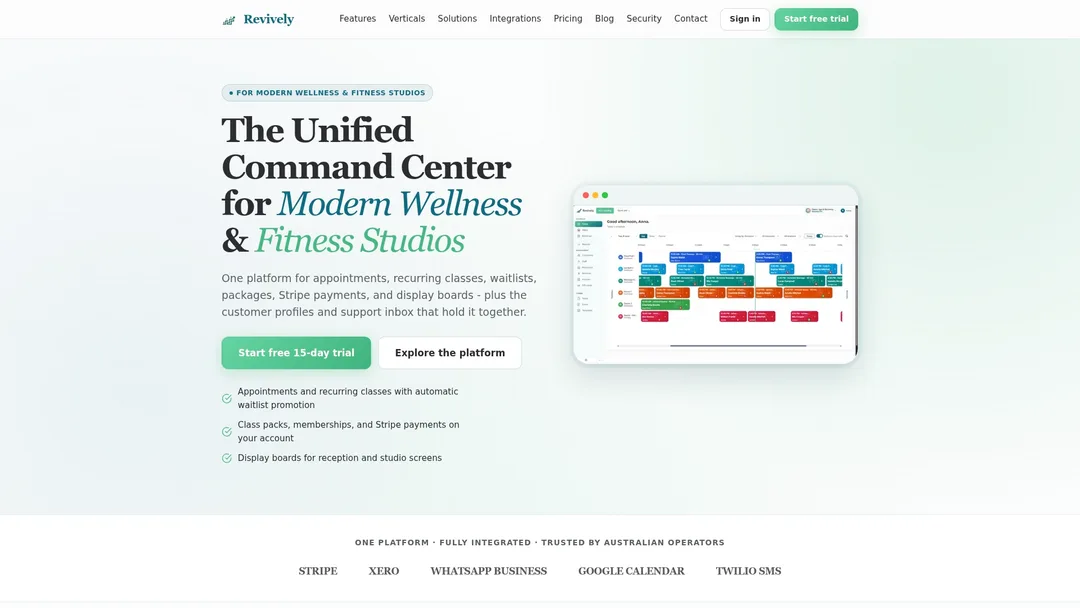
This level of integrated management is particularly crucial for studios juggling multiple rooms or locations, where relying on spreadsheets and paper waitlists simply can't keep pace with real-time bookings. Even foyer crowding at class changeover becomes more manageable with display boards showing live class status, preventing clients from bunching up at the door. For growing studios, our multi‑location workspaces ensure capacity rules remain consistent and enforceable across every centre you operate.
Revively offers flexible tiered plans with both monthly and annual pricing options. Full plan details, tailored to your room count and staff numbers, are available on our pricing page. Take control, optimise your operations, and set your first hard capacity cap with Revively before your next timetable goes live.
Sources
- Safe spaces for dance " Ausdance | Dance Advocacy
- Model Code of Practice: How to manage work health and safety risks
FAQ
What Is the Minimum Safe Space Per Dance Student in Australia?
Ausdance recommends 6 square metres per participant as a safety minimum for most movement classes, with 9 square metres as the ideal. For very low-intensity social styles, it might sometimes be safe at around 4 square metres per person, but this is heavily dependent on excellent ventilation and the specific activity.
How Many Air Changes Per Hour Does a Studio Need?
Studios used intensively should aim for the recommended range of air changes per hour for such spaces, as advised by Ausdance. If your room's ventilation system cannot achieve this range, it is critical to reduce the headcount, as air quality often overrides floor space availability for safety.
How Does Automatic Waitlist Promotion Work with Revively?
Revively's automatic waitlist promotion swiftly moves the next person on the waitlist into a freed spot as soon as a cancellation occurs. Clients are notified instantly (typically via SMS or app push) and given a short confirmation window (e.g., 15-30 minutes). If they don't confirm, the spot automatically passes to the next person, ensuring your classes remain full and safe without manual intervention.
What Records Should an Australian Studio Keep for WHS Compliance Related to Capacity?
Under Safe Work Australia's risk management framework, you should maintain records demonstrating a continuous loop of identifying, assessing, controlling, and reviewing hazards. For capacity, this means a documented risk register for each room, records of ventilation checks and servicing, notes from any incidents or near-misses, and staff training records confirming teachers understand and adhere to each room's capacity limits.
How Much Does Revively Cost For a Studio in Australia?
Revively offers a range of flexible subscription plans designed to suit various studio sizes and operational needs, with both monthly and annual billing options available. Comprehensive details on pricing, features included in each tier, and any available add-ons can be found directly on our pricing page.
Recommended for Your Australian Studio
- Capacity Control: The Unsung Hero of a Thriving Aussie Studio
- Studio Scheduling Chaos? Your Resource Utilisation Report Holds the Key to a Calmer Roster
- Stop the Studio Mayhem: How to Really Reduce Double Bookings (Without More Admin Headaches)
- The Real Cost of Half-Empty Classes: Why Australian Studios Need to Master Attendance Rates