
Late Arrival Policy for Studios and Spas: How to Write One
! Instructor pauses a late arrival at class
A good late arrival policy answers four questions: how long is the grace period, what does the client still receive, what do they pay, and when are they turned away.
It's 6:03 AM. The studio's warm, the instructor's cueing the perfect sunrise flow, and then - bang. The door rattles. A client, flustered and apologetic, bursts in, missing the vital warm-up. Do you let them in? Charge them? Rebook? That split-second, high-pressure decision? That's precisely why your Australian wellness or fitness studio needs a rock-solid, crystal-clear late arrival policy.
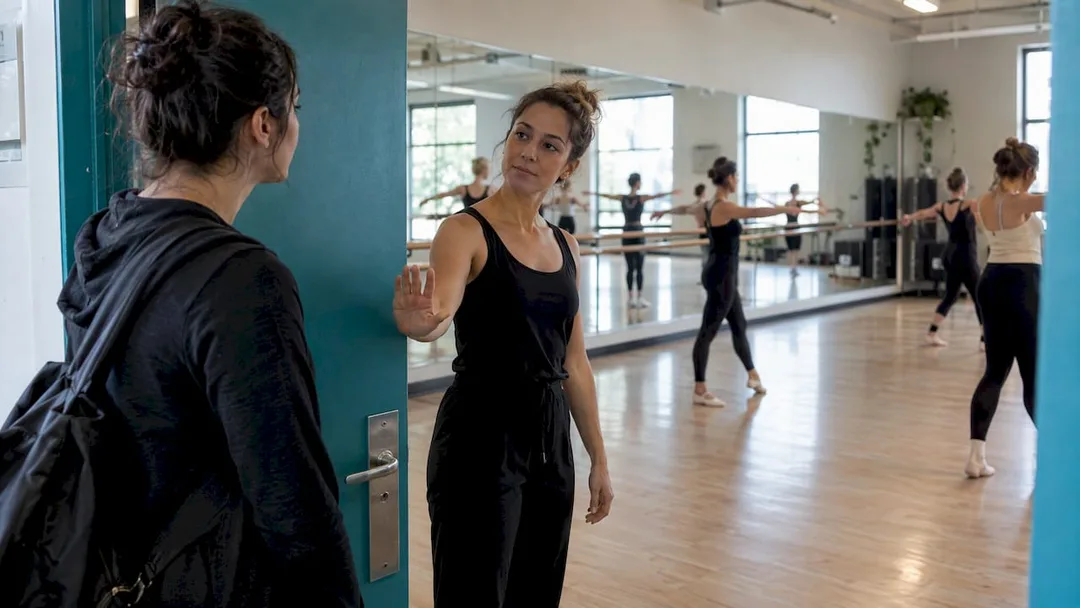
A well-crafted policy isn't about being rigid; it's about setting expectations, protecting your business, and ensuring a smooth experience for everyone - especially those who arrive on time. It defines how much wiggle room you offer, what services a late client still receives, what they pay (with full GST compliance, naturally), and, crucially, when they're turned away for safety or scheduling reasons. The rules will differ wildly between a bustling group class and a one-on-one physiotherapy session, so specificity is key.
This isn't just theory. We're diving into what Australian studios and spas actually do, how to keep your late fees fair and legally sound under consumer law, and the golden ticket: how to enforce your policy with zero awkward conversations at the front desk. Because let's be honest, your team should be inspiring clients, not policing the clock.
The Raw Truth: Your Late Arrival Policy at a Glance
- Group classes demand a firm cut-off, typically between 5 to 15 minutes. Why? Safety, warm-up integrity, and respecting those who arrived promptly. A late entry disrupts the entire rhythm.
- Private appointments and treatments usually proceed, but they finish at the originally booked time. This protects your next client and keeps your schedule (and your team's sanity) intact. Full fee still applies.
- Transparency is non-negotiable. Your policy must be crystal clear before a client confirms their booking. Any fees must reflect a genuine pre-estimate of loss, not a punitive measure, adhering to Australian Consumer Law.
- Define "late" in black and white. Specify the exact number of minutes, then apply it consistently to every client, every time. No favourites, no exceptions unless explicitly outlined.
- Automate, automate, automate. Your studio management software should handle check-in cut-offs, waitlist promotions, and fee application. This empowers your staff to focus on service, not policy enforcement.
Table of Contents
- What Your Late Arrival Policy Must Cover
- How Australian Studios & Spas Manage Latecomers
- Group vs. Private: Different Rules for Different Sessions
- Crafting Your Policy: A Template for Clarity
- Late Arrival Fees: Navigating Australian Consumer Law
- Making Your Policy Stick: Consistency & Automation
- Power Your Policy with Revively
- Frequently Asked Questions
- Sources
- Recommended Reading
What Your Late Arrival Policy Must Cover
Beyond just "don't be late," a truly effective late arrival policy provides a roadmap for both you and your clients. It's distinct from a cancellation policy, but they often intertwine; a very late arrival might trigger your no-show or late cancellation rules.
Here are the five critical pillars your policy needs to address:
- The Grace Period: How many minutes after the scheduled start time can a client still reasonably enter or be served? This is your flexibility window.
- The Cut-Off Point: This is the hard line. At what exact minute is entry refused, or the booking automatically marked as cancelled?
- What the Client Receives: Will they get a full session, a shortened version, or miss out entirely? Be explicit.
- What the Client Pays: Is it a full charge, a forfeited class credit, or no charge at all? Crucially, if you're charging, ensure your system automatically issues a legally compliant Australian Tax Invoice with 10% GST clearly itemised.
- How to Notify You: Provide clear instructions for clients running late - reply to a reminder SMS, call, or use a booking link. This fosters communication and pre-empts problems.
How Australian Studios & Spas Manage Latecomers
While the specifics might vary, a consistent pattern emerges across Australia: stricter rules for group settings, more flexibility (though not extended time) for one-on-one sessions.
| Business Type & Context | Published Approach |
|---|---|
| Pilates Studio, Group Class | Entry refused after 5 minutes, full class charged |
| Pilates Studio, Private Session | Session runs, finishes on time, full fee charged (same source) |
| Pilates & Yoga Studio | No late entry, doors locked at class start, treated as a no-show |
| Dance Studio, Canberra | Entry may be refused after 15 minutes, class credit not returned |
| Dance Studio, Prahran | 10-minute cut-off for late attendance |
| Day Spa, Point Cook | Treatment shortened if late, cancelled and charged if not arrived within 15 minutes |
| Bathhouse & Spa | After 15 minutes, booking may be cancelled or shortened without refund |
| Physio & Pilates Clinic | Session ends at original time, full fee applies |
A few observations here: dance studios sometimes offer a slightly longer grace period, often explaining it by citing the importance of the warm-up for injury prevention. Spas almost universally shorten treatments rather than extending them. And a common thread: the end time never shifts.
Group vs. Private: Different Rules for Different Sessions
You wouldn't apply the same rules to a yoga class as you would a deep tissue massage. Separate your policies for group and individual bookings. A class has a collective energy and a shared start; a one-on-one session is a dedicated block of time for a single client and practitioner.
Group Classes: The Non-Negotiable Cut-Off
When a group class has begun, your instructor is already in flow, the room is set, and the energy is building. A late entrant isn't just a minor inconvenience; they disrupt the entire group's focus, impact safety (especially if they miss the warm-up), and pull the instructor's attention away. As one studio articulates, their group rule is specifically for the safety and enjoyment of clients already in the session. That rationale is hard to argue with.
Practical Considerations for Your Group Class Policy:
- Establish a firm cut-off: Somewhere between 5 and 15 minutes is typical. Studios with dynamic warm-ups (think Pilates, high-intensity yoga, or dance) often lean towards the shorter end.
- Clarify credit implications: Is the class credit or pack session forfeited, or can it be returned for future use? Make this explicit.
- Release the spot: Many studios state that a late arrival's place may go to a waitlisted or walk-in participant once the class has started. This is crucial for maximising revenue. Revively's smart waitlists can automatically promote a waitlisted client, turning a potential lost spot into a filled one without any manual fuss.
Private Sessions & Treatments: Time Doesn't Expand
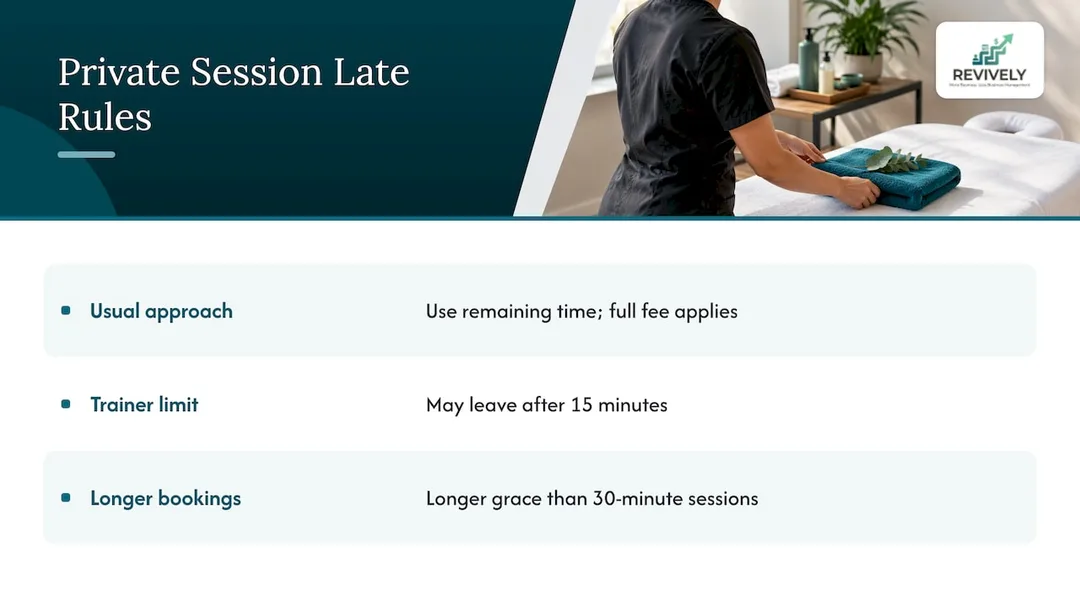
For a remedial massage, a one-on-one PT session, or a private lesson, the standard approach is to deliver what time remains. The session will still conclude at its originally scheduled end time, and the full fee typically applies. Some providers might add an outer limit - for example, a trainer who may leave after 15 minutes, or a clinic where longer appointments allow a longer grace period than 30-minute ones.
The logic is simple and ironclad: your next client is booked immediately after. Any buffer you've built in for room sanitisation or preparation is also eaten into by a late start. Revively's multi-resource scheduling is designed with these critical appointment buffers in mind, ensuring your studio flows seamlessly even when clients run a little behind.
Crafting Your Policy: A Template for Clarity
Avoid legal jargon and fluffy language. Use concise sentences and clear numbers. Here's a structure you can adapt for your Australian studio:
Group Classes:
"Please arrive 5 to 10 minutes prior to class start. For safety and to respect our other clients, doors close exactly [X] minutes after the scheduled start time. If you arrive after this cut-off, we unfortunately cannot admit you, and your class credit will be used/forfeited."
Appointments & Treatments:
"If you anticipate running late for your private session or treatment, please reply to your reminder or call us as soon as possible. We will do our best to deliver what we can in the time remaining, but your session will still conclude at its originally booked end time. The full fee will apply. If you arrive more than [15] minutes late without prior notice, we may need to rebook you, and this will be treated as a late cancellation, incurring a [specific fee]."
This second paragraph aligns with common Australian no-show policy guidance, which advises clearly defining the trigger for fees.
Essential Additions to Your Policy:
- How to notify: Reiterate the preferred method (reply to SMS, call, client portal). Specify that notice counts from when you receive it.
- Exceptions: Outline any rare circumstances you will consider (e.g., medical emergency, severe accident). Consistency here is paramount.
- Consumer Rights: Add a line affirming that your policy operates in conjunction with a client's rights under Australian Consumer Law.
(Side note for studio owners managing teams: this same fairness and clarity should apply to your internal operations. These fair shift swap rules offer a great framework for staff arrangements.)
Late Arrival Fees: Navigating Australian Consumer Law
Yes, you can charge for a late arrival or a missed session. But and this is a big "but" for Australian businesses - the fee must be fair, transparent, and disclosed upfront. This is general information, not legal advice; always verify your terms with your state or territory fair trading body or a legal professional.
The Australian Consumer Law Imperative
Any fees for late arrivals or no-shows must reflect a genuine pre-estimate of likely loss incurred by your business, not an arbitrary penalty. Arbitrary, punitive fees can be deemed unenforceable. Furthermore, from 9 November 2023, proposing or relying on unfair terms in standard form contracts is banned. A term is considered unfair if it causes a significant imbalance, isn't reasonably necessary to protect your legitimate interests, and would cause harm if enforced.
Here's what Australian law expects:
- Genuine Loss: As advised by Australian law firms like Sprintlaw, a cancellation fee should reflect a genuine pre-estimate of likely loss. This might include lost revenue from the unfilled spot, staff wages for the unutilised time, and administrative costs.
- Disclosure First: Crucially, any fees must be disclosed before the client confirms their booking. In NSW, businesses have specific obligations to take reasonable steps to ensure consumers are aware of terms requiring an exit or cancellation fee.
- Unfair Contract Terms: The ACCC's updated guidelines mean proposing or relying on unfair terms in standard form contracts is banned. This reinforces the need for fees to be reasonable and justifiable.
- Western Australia Specifics: WA's fitness code specifically prohibits fees unrelated to financial loss caused by a cancellation.
For a deeper dive into structuring these fees, check out our comprehensive guide to fair and legal late cancellation fees. Curious about what missed sessions are really costing your studio? Try our no-show cost calculator.
Making Your Policy Stick: Consistency & Automation
A beautifully written policy is useless if it's not consistently applied. That's where smart software, like Revively, becomes your best friend.
- Prominent Display at Booking: Embed your policy directly onto your online booking page, ideally with a mandatory tick-box acceptance. Repeat it clearly in the confirmation email or SMS.
- Automated Reminders with Reply Options: Send automated reminders that offer clients an easy way to communicate if they're running late or need to reschedule. Revively handles this seamlessly.
- Automate the Cut-Off: Let your software do the heavy lifting. When the system automatically closes check-in at your defined cut-off and releases the spot (or applies the fee), your instructor doesn't have to confront a client at the door. This transforms awkwardness into seamless operation.
- Maintain Meticulous Records: Log every late arrival, what was charged, and any exceptions made. This audit trail is invaluable for consistency and compliance, especially with Australian Privacy Principles (APPs) if you're storing client data like health intake forms and booking history. Revively ensures all your client data resides securely in Australia, meeting these critical compliance standards.
- Be Unwaveringly Consistent: Waive a fee only by pre-defined exception, not based on who complains loudest. Inconsistency erodes your policy's credibility faster than anything else.
Our article on automated cancellation policies delves into the setup specifics in more detail.
Revively's View: Let the System Hold the Line
We've seen it countless times in Australian studios: the policy itself is rarely the problem. It's the enforcement that crumbles. A friendly instructor, faced with an apologetic client at the door, will often bend the rule. The next client expects the same. Soon, your carefully crafted policy is nothing more than a suggestion.
At Revively, our approach is to empower the system to hold the line. Our unified cloud command centre, with its intuitive class timetables, automatic waitlist promotion, and smart appointment buffers, is designed to work in harmony. This means a missed start releases the spot and protects the next booking - without a difficult conversation for your team.
Your studio deserves software that handles the details, ensuring 10% GST is automatically applied and legally compliant Australian Tax Invoices are issued. Our 100% legal Xero integration ensures automated, two-way mapping of tax codes, revenue accounts, and liabilities, making your quarterly Business Activity Statements (BAS) flawless and audit-proof.
Write a fair rule, show it at booking, and then let your all-in-one spa booking software apply it the same way, every time. Your team stays friendly, your policy stays credible, and your revenue stays robust. This is how you differentiate your studio as a true Mindbody alternative Australia-wide.
Andreea, Revively Co-founder
Power Your Policy with Revively
Revively isn't just another booking system; it's an Australian-made, unified cloud command centre (CRM + multi-resource scheduler) designed specifically for wellness and fitness studios - spas, recovery centres, yoga/Pilates studios, clinics, and dance schools across Australia.
From recurring class timetables and automatic waitlist promotion to online booking, digital intake forms, and intelligent multi-resource scheduling with essential cleaning buffers, Revively consolidates your entire operation onto one intuitive dashboard. We handle all your client data with Australian data residency and full APP compliance, so you can rest easy knowing sensitive information is secure and local.
Discover our plans and find the perfect fit for your studio: The Growth plan is $99 per month (or $990 per year), Solo is $39 per month, and Pro is $199 per month. See all plans and add-ons, explore our robust recurring classes and waitlists, or learn more about how our wellness studio software can transform your business at https://www.revively.app/l/fb/wellness.
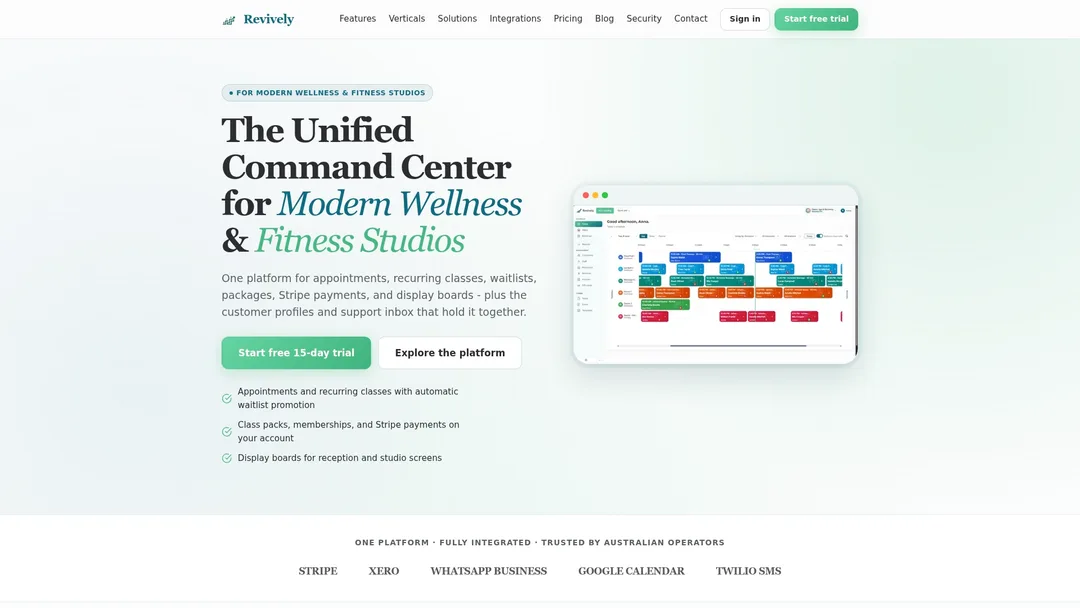
Start a free trial today and set your cut-offs and late policies in our easy-to-use booking settings. Experience the difference a truly integrated, GST compliant studio software makes.
Frequently Asked Questions
How long should the grace period be for a yoga or Pilates class?
Most published Australian policies range from 5 to 15 minutes. Pilates and yoga studios often opt for the shorter end, with some refusing entry immediately after the class starts. The key is to choose a number you can consistently enforce, clearly state it in minutes, and explain the safety or disruption rationale.
Can I charge a client who arrives late?
Yes, absolutely. However, the fee must be clearly disclosed before they confirm their booking, and it must legitimately reflect your studio's direct financial loss, not an arbitrary penalty. If in doubt, consult your state or territory fair trading body or a legal professional specialising in consumer law.
Should I extend a session when a client is late for a private appointment?
Generally, no. The best practice for spas and clinics is to finish the session at the originally booked time. This ensures your next client isn't kept waiting, protects your schedule, and confirms the full fee still applies for the booked time slot. Make this clear in your policy.
What if the client has a genuinely good reason for being late?
It's wise to decide on a few pre-defined exceptions in advance, such as a documented medical emergency or a serious accident. Crucially, record every exception made to ensure consistent application. Charging the same fee regardless of circumstances entirely beyond a client's control can be seen as unfair under Australian Consumer Law. Your policy should allow for reasonable discretion, but that discretion should be guided by clear internal rules, not ad-hoc decisions.
Sources
- Client Guidelines, Regent Pilates
- Terms & Conditions, Sixtwo Pilates & Yoga
- 6th Position terms and conditions
- Adult Dance Classes, The Space Dance & Arts Centre
- Spa Etiquette, Seasons5 Spa Retreat
- Terms of Use, The Bathhouse Group
- Terms and Conditions, Base Physiotherapy & Pilates
- Class & Personal Training Booking Policy, FIT Health Clubs
- FAQ, Doing It With Dandy
- Terms of Service, Bodyfix Physiotherapy
- Contracts, ACCC
- Disclosure obligations for NSW businesses, NSW Government
- WA's fitness code, Consumer Protection WA
- Cancellation Fees: Legal Rules for Australia, Sprintlaw
- No-Show Fees: Legal Setup for Australia, Sprintlaw
- Australian Laws on Cancellation Fees, Sprintlaw
- Shift swap rules, EntreResource
Recommended Reading
- Taming the "No-Show" Beast: Your Aussie Studio's Guide to Fair & Legal Late Cancellation Fees
- Tame the Clock Chaos: How Appointment Buffers Keep Australian Studios Running Smoothly
- Treatment Room Turmoil: Why You Need 15 Minutes Between Spa Sessions (And Software That Gets It)
- How to Avoid Double Booking: A Studio Owner's Checklist