
Treatment Room Scheduling: Add 15 Minutes Between Spa Sessions
! Therapist resetting a spa treatment room
Treatment room scheduling works when rooms, practitioners and cleaning buffers are booked as one unit, not three separate calendars.
Imagine this: The massage therapist is running late, the client for the next facial is already tapping their foot, and the "clean and sanitise" note for Room 3 somehow vanished from the whiteboard. You're juggling three separate calendars - one for staff, one for rooms, one for equipment - and hoping nothing clashes. It's not just frustrating; it's costing you money, client loyalty, and your sanity.
Running a wellness or fitness studio in Australia means precision. Every minute counts. Every room needs to be optimised. And every piece of client data, every GST calculation, and every BAS report needs to be spot-on. What if your scheduling software could handle all of that, treating rooms, practitioners, and even those critical cleaning buffers as one unified booking, instead of a chaotic cluster of moving parts?
That's where intelligent multi-resource scheduling comes in. It's not just about filling slots; it's about creating seamless client experiences, maximising your studio's potential, and ensuring you're 100% compliant with Australian regulations.
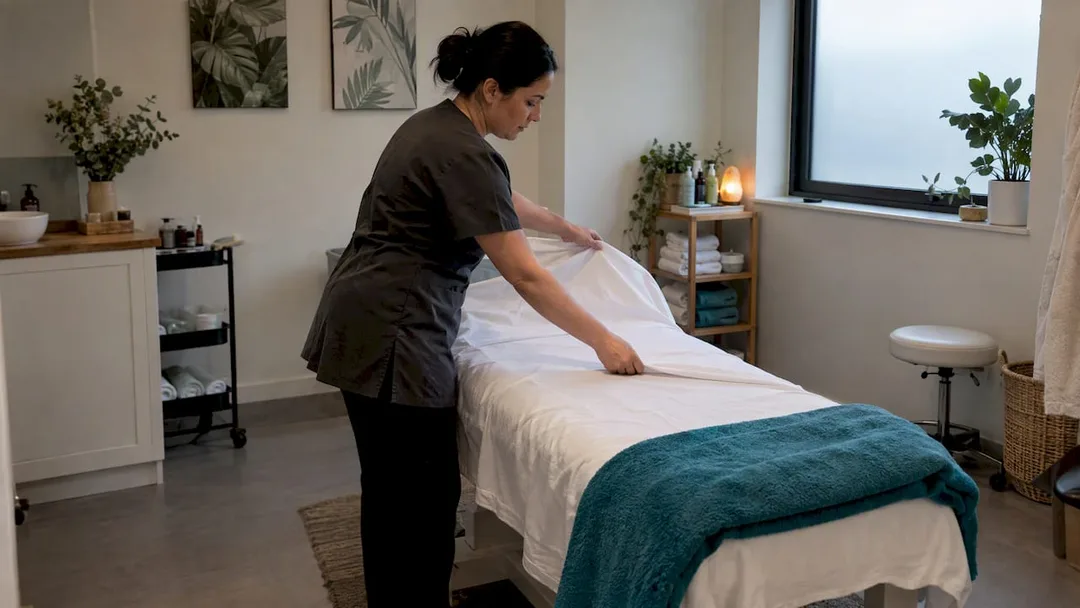
This guide isn't just about software; it's about shifting your operational mindset. We'll show you what to demand from an all-in-one spa booking software or Mindbody alternative, how to set it up without the usual headaches, and the game-changing rules that keep your treatment rooms humming. Plus, we'll dive deep into Australian data privacy, GST compliance, and Xero integration so your books are as flawless as your bookings.
A Quick Win:
A single booking should lock in the practitioner, the room, and any required equipment. Ditch manual notes for cleaning time; attach non-bookable buffer slots directly to your service templates. This simple shift alone can slash double-bookings and reduce operational friction.
Table of Contents
- What a World-Class Treatment Room Scheduler Actually Does
- Unlocking Studio Potential: Integrated Room & Practitioner Scheduling
- Your Step-by-Step Guide to a Smooth Scheduling Setup
- Smart Operational Rules for Flawless Room Management
- Australian Privacy & Compliance: Protecting Your Clinic's Data
- Why Unified Systems Outperform Patchwork Solutions
- How Revively Streamlines Your Treatment Room Bookings
- Frequently Asked Questions
- Expert Insights & Resources
- Recommended Reading from Revively
What a World-Class Treatment Room Scheduler Actually Does
A treatment room scheduler that genuinely earns its keep doesn't just manage appointments; it eradicates the chaos of mismatched resources. Before you commit to any platform - especially if you're exploring Mindbody alternatives in Australia - demand that it solves these core headaches as standard, not as costly add-ons.
- Unified Calendar View: Picture one screen showing practitioner availability, room status, and client bookings. Clients can self-book online, picking a person and a time, knowing the room is automatically reserved. No more cross-referencing three different places.
- Multi-Resource Booking Magic: A single client booking should instantly reserve the practitioner, the specific treatment room, and any specialised equipment (think a sauna, a hydrotherapy tub, or a specific reformer). This prevents accidental double-booking of critical assets.
- Automated Buffer Zones: That crucial 10-15 minutes for cleaning and setup? It's baked into the service template as non-bookable time. A 45-minute massage with a 15-minute turnover means a 60-minute block on the calendar - automatically. No forgotten notes, no rushed changes.
- Waitlists & Smart Reminders: Life happens. Automated waitlist promotion means cancellations get filled fast. SMS or email reminders drastically cut down no-shows, keeping your schedule tight and your revenue predictable.
- Integrated Payments & Monetisation: Take deposits, process payments, and seamlessly handle memberships or multi-resource class packs at the point of booking. This eliminates chasing invoices and ensures your Australian Tax Invoices are issued correctly, with 10% GST factored in automatically.
- Actionable Reporting: Forget guesswork. Pinpoint bottlenecks with real data: room utilisation rates, average turnover times, and occupancy trends. This insight is gold for optimising your flow.
Features are only half the story. The best systems also integrate flawlessly. Think Xero sync for seamless accounting and BAS accuracy, and a direct Stripe connection for secure payments. If you're running a multi-practitioner clinic, our guide to choosing multi-practitioner clinic software dives even deeper into these critical decision criteria.
Unlocking Studio Potential: Integrated Room & Practitioner Scheduling
Treating rooms as a separate entity from your practitioners is a common, often costly, operational blind spot. The solution lies in software that recognises rooms as a bookable resource directly tied to the service itself, not just an afterthought scribbled on a daily roster.
Research on integrated scheduling consistently highlights this approach as one of the most reliable ways to slash idle time and boost overall efficiency. Furthermore, studies like those published in Wiley's Production and Operations Management confirm that joint capacity and smart appointment policies improve clinical throughput and significantly reduce client waiting times. That same research found that sequencing shorter, lower-variance appointments earlier in the day reduces overall waiting time without compromising how busy your practitioners remain.

This sequencing rule is surprisingly easy to implement:
- Schedule short, predictable treatments (like express massages or quick consultations) in the morning.
- Allocate longer or more variable sessions (such as extended bodywork or initial assessments) for the middle of the day. A slightly longer buffer here can easily absorb any unexpected overruns, preventing a domino effect.
Simulation studies of multi-disciplinary clinics further demonstrate that actively managing rooms as an adjustable variable - alongside slot length and practitioner count - is key to balancing high room utilisation with minimal client waits. Modelling rooms this way also prevents that frustrating scenario of clients being shuffled between rooms mid-treatment, a notorious "failure mode" that pops up when room counts and slot lengths are mismatched.
Once your intelligent scheduling system is in place, keep an eye on these vital metrics weekly:
| Metric | Why it Matters | Target / Action |
|---|---|---|
| Room Utilisation Rate | Percentage of bookable hours actually generating revenue. | Aim for 70-85%. Below 60% indicates idle assets; above 90% risks burnout and service quality. |
| Average Turnover Time | Minutes from one booking ending to the next starting, including cleaning. | Keep consistent (e.g., 15 mins). Inconsistent times point to missed buffers or manual errors. |
| Daily Finish-Time Variance | How much the last appointment drifts from its scheduled end. | Minimal drift. High variance suggests insufficient buffers or poor sequencing, leading to staff overtime. |
| No-Show Rate | Missed appointments as a percentage of total bookings. | Below 5%. Higher rates indicate poor communication, ineffective reminders, or a need for stricter deposit policies. |
Your Step-by-Step Guide to a Smooth Scheduling Setup
Migrating from spreadsheets or a clunky old system to a streamlined multi-resource scheduler doesn't have to be daunting. Follow these deliberate steps in order to ensure a smooth transition and avoid unexpected hiccups.
- Inventory Everything: List every single treatment room, piece of specialised equipment, and any unique requirements (e.g., specific lighting, sound system). Crucially, record the exact setup and cleaning time each one needs.
- Craft Service Templates: Build a template for each service you offer. This template should bundle the required practitioner time with the specific room and equipment it needs. One booking, all resources reserved - automatically.
- Define Availability Windows: Clearly set staff hours, room operational hours, and role-based permissions. Ensure reception, practitioners, and owners only see the information relevant to their roles, reducing clutter and confusion.
- Configure Automated Buffers: Attach cleaning and turnover blocks directly to each service template as non-bookable time. This isn't a manual note; it's a fixed part of the booking.
- Enable online self-booking: Switch on your client-facing portal. Test the flow: can clients easily select practitioners? Can they book overlapping services (e.g., a couples massage)? How do last-minute cancellations appear?
- Integrate Payments: Link up your deposit rules, and rigorously test how packages or memberships are redeemed at checkout. Confirm your system automatically calculates 10% GST and issues compliant Australian Tax Invoices.
- Build Reporting Views: Set up a weekly dashboard focused on utilisation, turnover, and no-shows. Schedule a recurring calendar reminder to review these metrics and adjust your operations proactively.
Pro Tip: Don't switch cold turkey! Run your new scheduling system alongside the old one for at least one full week. This gives you a critical window to compare utilisation rates, catch any potential double-booked resources (before clients do!), and fine-tune your settings.
For a deeper dive into this setup process, especially if you're migrating from a basic booking tool that struggles with rooms, consult our guide to unified appointment software for clinics in Australia.
Smart Operational Rules for Flawless Room Management
You don't need to reinvent the wheel. A few tried-and-tested scheduling templates and standing rules can cover most treatment room layouts, whether you're a therapy clinic, a massage studio, or an allied health practice. Adjust the specifics to your unique offerings, but the underlying structure remains robust.
Core Scheduling Templates:
- Template A: Mixed Short & Long Sessions: Prioritise shorter, predictable treatments in the early morning. Transition to mixed blocks through the middle of the day, incorporating longer buffers to account for increased variance in session lengths. This helps maintain flow without constant rescheduling.
- Template B: Shared Rooms (The Smart Way): Where possible, assign fixed room blocks per practitioner. Use floating or shared room rules only for overflow or specific equipment needs. This prevents the nightmare scenario of two practitioners assuming the same room is free simultaneously.
- Template C: Room Rental Optimised: If you let out space by the hour, implement a public booking slot with upfront payment collection. Crucially, ensure the system instantly syncs and blocks that room across all other internal calendars the moment it's booked.
Non-Negotiable Standing Rules:
- Mandatory Cleaning Buffer: A minimum of 10 to 15 minutes between bookings in the same room. This must be non-negotiable and hard-coded into your service templates. No exceptions.
- Maximum Consecutive Bookings: Implement a daily cap on back-to-back sessions for any given room. This prevents those essential turnover times from quietly eroding throughout the day, ensuring quality and hygiene standards are maintained.
- Late Booking Cut-Off: Stop online bookings a set number of hours before a slot (e.g., 2-4 hours). This gives your staff adequate time to prepare the room, review client notes, and manage resources without last-minute panic.
- Auto-Release on No-Show: If a client doesn't arrive within a defined grace period (e.g., 5-10 minutes), the system should automatically free up the room. This ensures the slot isn't wasted and can potentially be filled by a waitlisted client.
By using two or three of these templates as weekly presets, your staff aren't rebuilding scheduling logic from scratch every Monday. They're working with a system that promotes efficiency and reduces errors.
Australian Privacy & Compliance: Protecting Your Clinic's Data
For Australian wellness and fitness studios, scheduling software isn't just about managing time; it's about safeguarding sensitive client health information. Your obligations under the Privacy Act 1988 and the Australian Privacy Principles (APPs) are non-negotiable. Before signing up with any vendor, especially an overseas provider, scrutinise their approach to data. Practice management guidance offers an excellent starting point for what to ask.
Here's what to demand from any all-in-one spa booking software:
- Australian Data Residency: Where is your client data physically stored? For peace of mind and strict APP compliance, insist on a platform that guarantees data is hosted locally in Australia. This ensures client booking histories, health intake forms, and personal details remain on Australian soil.
- Robust Encryption: Confirm that all data is encrypted both in transit (when it's moving between servers or to your browser) and at rest (when it's stored on servers).
- Independent Certification: Look for vendors with ISO 27001 or equivalent security certifications. This provides an independent verification of their information security management systems, crucial when handling clinical information.
- Granular Access Controls:
- Role-Based Permissions: Can you set precise permissions so reception staff only see what they need, while practitioners access relevant client notes, and owners have full oversight?
- Audit Logs: Is there a clear, immutable record of who accessed what data, and when?
- Data Retention & Backups: Are data retention policies clear, and are secure, regular backups performed to prevent data loss?
- Secure Integrations: Your Xero and Stripe connections must use tokenisation for payment data. Crucially, neither your accounting software nor your payment gateway should ever have access to sensitive clinical notes. This segregation is vital for compliance.
Critical Compliance Alert:
Any scheduling platform you choose must unequivocally confirm Australian data residency for all client information. This is foundational to meeting your obligations under the Australian Privacy Principles and building trust with your clientele.
Why Unified Systems Outperform Patchwork Solutions
The studios and clinics that consistently struggle with treatment room management aren't short on effort. More often, they're drowning in the complexity of disparate systems: a paper room diary, a staff roster in a spreadsheet, and a separate online booking app that simply don't communicate. This forces someone, usually you or your already-stretched team, to manually reconcile everything. That's where errors creep in, double-bookings happen, and precious time vanishes.
A unified cloud command centre changes everything. By bringing rooms, practitioners, equipment, and cleaning buffers into one seamless system, that tedious, error-prone manual reconciliation disappears. And with it, goes the majority of double-bookings, scheduling conflicts, and client frustration.
"Stitching together multiple apps never works perfectly. There's always a gap, a manual step, or a compromise. A truly unified platform removes those weak points entirely, simplifying operations from client booking to BAS lodgement."
- Revively Studio Operations Specialist*
How Revively Streamlines Your Treatment Room Bookings
We built Revively.app because we deeply understand the operational chaos of running an Australian wellness studio or clinic. Our platform is designed as a unified cloud command centre that inherently treats rooms, practitioners, and cleaning buffers as one intelligently bookable unit. When a client books a service, the system automatically reserves the required room and any associated equipment, complete with the necessary buffer time.
Our multi-resource appointment grids bring saunas, massage rooms, yoga studios, and their respective turnover times together on a single, intuitive dashboard. We integrate seamlessly with Stripe for powerful membership management and multi-resource class packs, and offer native Xero integration for flawless reconciliation and BAS accuracy.
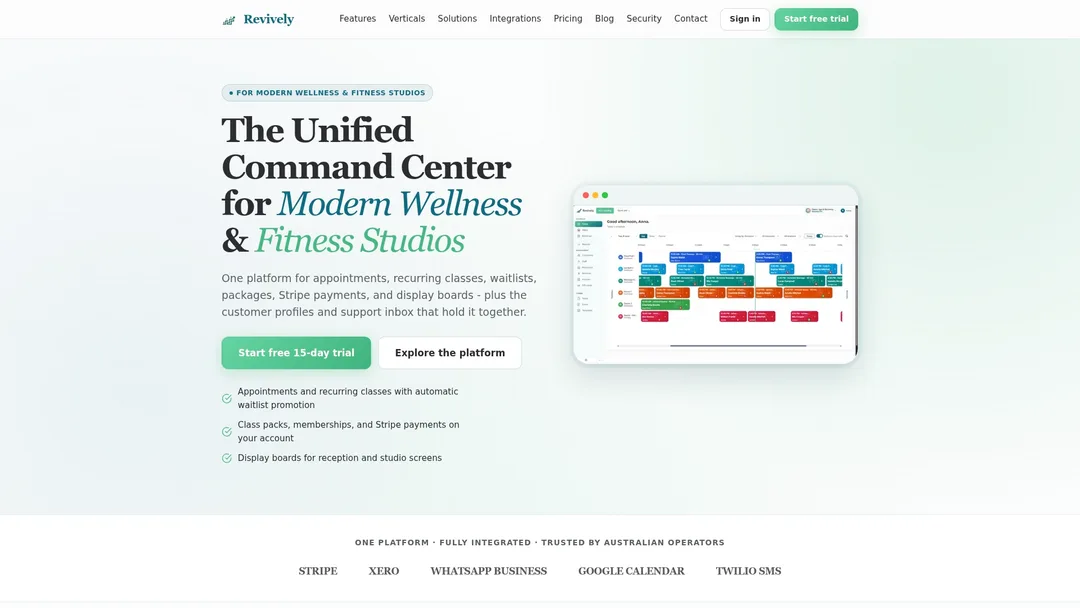
Here's how Revively ensures your treatment rooms run like clockwork:
- True Multi-Resource Bookings: Reserve practitioners, rooms, and equipment in a single, smart step, perfectly matching your service templates. This is key for efficient multi-resource studio scheduling.
- Automated, Configurable Buffers: Attach essential cleaning and setup times directly to each service. No more missed notes or manual adjustments.
- Crystal-Clear Display Boards: Keep your front desk and clients perfectly aligned on room status, practitioner locations, and next appointments, without any extra admin.
- Flawless GST & Xero Integration: Our system natively handles 10% GST calculations across casual classes, memberships, and multi-resource packages, automatically issuing legally compliant Australian Tax Invoices to clients. The two-way Xero mapping of tax codes, revenue accounts, and liabilities guarantees your quarterly Business Activity Statements (BAS) are flawless and audit-proof, eliminating manual spreadsheet errors. This is crucial for Australian businesses seeking GST compliant studio software.
- Australian Data Residency: All your client data, booking histories, and sensitive health intake forms are stored locally in Australia, fully complying with the Australian Privacy Principles (APPs).
Our Solo plan starts at $39 per month, with Growth and Pro tiers available as your studio or clinic expands. Visit our pricing page to compare plans, or explore how our wellness clinic features directly address the checklist above before you book a demo.
Frequently Asked Questions
What is a good booking system for wellness clinics in Australia?
A truly effective clinic booking system for Australian wellness centres treats rooms, practitioners, and equipment as one unified, bookable unit. Look for features like automated cleaning buffers, online self-booking with practitioner selectors, integrated payments that handle 10% GST and issue Australian Tax Invoices, and robust accounting integrations like Xero for BAS accuracy. Crucially, confirm that all client data is stored locally in Australia to comply with the Australian Privacy Principles.
What defines a treatment room in scheduling terms?
A treatment room is a dedicated space within a spa, clinic, or studio used for one-on-one services such as massage, physiotherapy, or beauty treatments. In the context of smart scheduling, it's considered a key resource that must be booked alongside the practitioner and any specific equipment required for the service. Treating it as a standalone, schedulable asset prevents double-booking and maximises utilisation.
What is the best scheduling platform for allied health therapists in Australia?
The "best" platform depends on whether a therapist operates solo or shares rooms within a multi-practitioner clinic. However, the core requirements remain consistent: a shared calendar that integrates all resources, multi-resource booking capabilities to prevent clashes, and automated buffers for seamless transitions. For Australian studios managing memberships or multi-resource class packs alongside individual sessions, look for platforms that integrate these monetisation features without needing a separate, patched-together system. This ensures a comprehensive, GST compliant studio software solution.
How do I reduce room idle time without hiring more staff?
The most effective strategy involves tracking key metrics weekly: room utilisation rate, average turnover time, and daily finish-time variance. Then, optimise your sequencing: schedule shorter, more predictable sessions earlier in the day, leaving longer or more variable appointments for later. Research consistently shows this sequencing reduces overall waiting time without reducing how busy practitioners stay, often fixing idle time more efficiently than adding headcount. Integrated scheduling software that models rooms as adjustable resources is essential for this approach.
Expert Insights & Resources
- The effect of integrated scheduling and capacity policies on clinical efficiency - Wiley
- Designing and scheduling a multi-disciplinary integrated practice unit - PMC
- Privacy Act & medical practice obligations - TalentMed
Recommended Reading from Revively
- Tame the Clock Chaos: How Appointment Buffers Keep Australian Studios Running Smoothly
- No More Scheduling Headaches: The Aussie Spa Owner's Guide to Smart, Stress-Free Software
- Stop the Studio Scramble: Mastering Spa & Wellness Bookings Without the Mayhem
- Double-Booked Disaster? Flawless Couples Massage Scheduling for Australian Studios