
Membership Pricing Models for Dance and Wellness Studios
! Studio owner comparing dance class price sheets
Most Australian dance studios settle on a three-rung ladder: casual drop-ins, prepaid class packs and recurring memberships.
The studio lights are on. The music's pumping. Your instructors are ready. But behind the scenes, you're juggling client spreadsheets, chasing overdue payments, and wondering if your pricing model is actually working - or just bleeding money. You've likely settled on the classic Australian studio three-rung ladder: casual drop-ins, pre-paid class packs, and recurring memberships. It's a good start. Casual classes reel them in, packs convert them, and memberships lock in loyalty.
But are you pricing from genuine costs and realistic attendance? Or just mirroring the studio down the road? And more importantly, does your booking software seamlessly handle all three, automatically calculating 10% GST, issuing legally compliant Australian Tax Invoices, and mapping everything flawlessly to Xero for BAS accuracy - without you ever touching a calculator or a manual entry?
This isn't just about setting a price; it's about building a sustainable, compliant, and profitable revenue engine. This guide cuts through the noise, showing Australian wellness and fitness studio owners - from dance schools and yoga centres to Pilates and recovery clinics - how to craft membership pricing models that stick. We'll show you what works, how to defend your rates, and where manual billing can trip you up.
The Nitty-Gritty: What You Need to Know, Fast
- Master the Ladder: You need three core product types: casual drop-ins, class packs, and recurring memberships. Each serves a distinct purpose.
- Tier by Access: Structure memberships based on access (e.g., one class/week, two, unlimited). Your unlimited tier should command a premium, significantly higher than your casual rate.
- Price from Reality: Base your pricing on your actual cost per filled spot and a realistic attendance rate, not theoretical peak capacity. This means your numbers are grounded in your operational truth.
- Australian Consumer Law First: Double-check minimum terms, auto-renewal clauses, and notice periods against Australian consumer guidance. Stay compliant, always.
- Unify Your Tech: Choose all-in-one software that natively manages memberships, packs, waitlists, and critical Australian GST calculations in one place, ensuring seamless operations and audit-proof financial reporting.
Your Revenue Ladder: Casuals, Packs & Memberships
Running a physical studio is a delicate balance. You want to attract new clients, convert them into regulars, and keep them coming back for years. That's where your pricing ladder comes in. It's not just a list of numbers; it's a strategic pathway designed to guide clients from curiosity to commitment.
Here's how the three core pillars of studio pricing work together:
| Pricing Pillar | Purpose | Ideal Client | Studio Benefit |
|---|---|---|---|
| Casual Drop-in | Low-barrier entry, trial, flexible access | Newbies, infrequent visitors, tourists | Attracts leads, anchors higher prices |
| Class Pack | Encourages commitment, rewards slight loyalty | Semi-regulars, undecideds, value-seekers | Drives initial conversions, reduces admin for repeat casuals |
| Recurring Membership | Cultivates long-term commitment, community | Committed regulars, core community | Stable, predictable revenue; higher client lifetime value |
Your Pricing Arsenal: The Models That Work
Across Australia, studios lean on a few proven pricing models. Understanding them is your first step to building a system that works for you.
1. Casual Drop-in: The Anchor
This is your most expensive way to access a single class - and for good reason. It sets the baseline, anchoring every other price point you offer. It's designed for flexibility, not value.
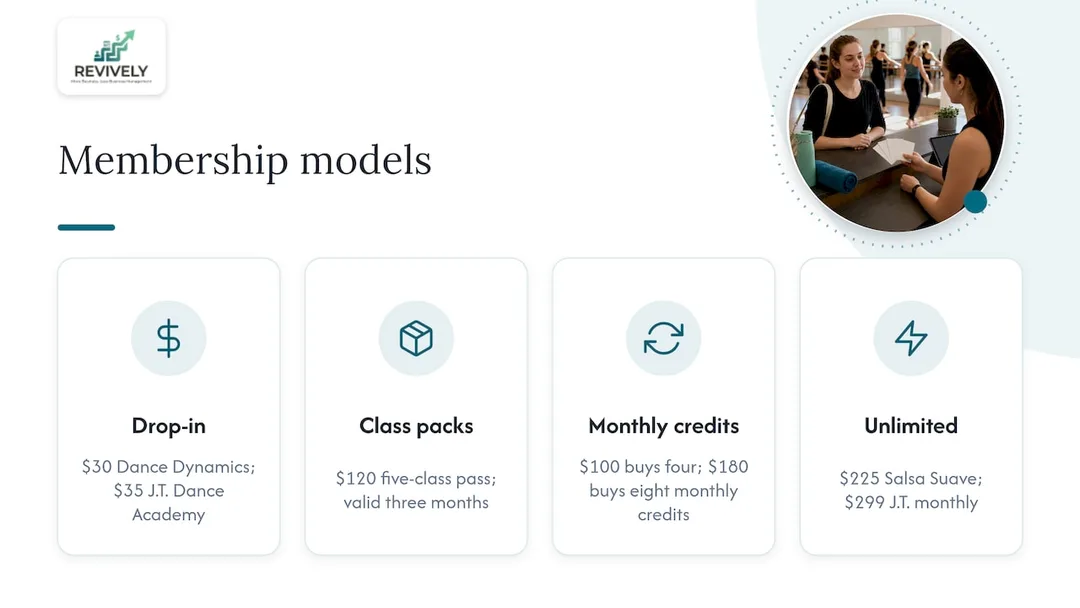
- Example: Dance Dynamics in Melbourne lists a $30 casual class, while J.T. Dance Academy charges $35.
2. Class Packs: The Conversion Catalyst
A bundle of credits, often with a strict expiry date. This isn't just about offering a discount; it's about nudging clients towards a short-term commitment and protecting your revenue. That expiry date is your friend: it motivates attendance and prevents unused credits from lingering indefinitely.
- Example: Dance On Newy sells a $120 five-class pass, valid for three months. Salsatown in Sydney offers six-class and 12-class passes with three-to-four-month validities.
3. Credit-Based Recurring Memberships: Flexibility Meets Commitment
Clients pay a monthly fee for a set number of class credits. This model offers a predictable revenue stream for you while providing consistent access for them. Some savvy studios even allow members to "bank" unused credits, which is a powerful retention tool for clients with unpredictable schedules.
- Example: J.T. Dance Academy's Flex 4 ($100 for four monthly credits) and Flex 8 ($180 for eight) are solid examples. SoaR Dance Studio takes it further, letting Duo members bank credits for up to three months.
4. Unlimited Memberships: The Ultimate Value Proposition
One flat fee, access to almost any regular class. This is your premium offering, designed for your most dedicated clients. Clear exclusions (like private lessons or special events) keep the offer clean and prevent revenue cannibalisation.
- Example: J.T. Dance Academy's Unlimited tier sits at $299 per month. Salsa Suave offers unlimited group lessons at $225 monthly, with longer terms from $650 for three months to $2,200 for 12 months - a great way to reward longer commitment.
Billing Frequency: Finding the Sweet Spot
The same access can be sold weekly, fortnightly, monthly, or by term. Each has its pros and cons:
- Shorter Cycles (Weekly/Fortnightly): Feel less daunting to clients, easier to budget.
- Longer Cycles (Monthly/Term): Provide steadier, more predictable cash flow for your studio.
Many Australian studios offer both, often discounting longer commitments to encourage greater loyalty. Dance Dynamics lists fortnightly tiers. Cortés Dance debits weekly but also offers a six-month commitment option. Find what works for your cash flow and your clients' comfort.
Crafting Your Tiers: Simplicity is Key
When a new client approaches your front desk or lands on your pricing page, confusion is the enemy of conversion. Your membership structure should be crystal clear, guiding them directly to their ideal option.
Tier by access, not by ambiguous labels. Make it obvious what they're getting. Cortés Dance does this brilliantly: "Foundation" (one class/week), "Progression" (two classes/week), and "Full Access" (unlimited). No guesswork required.
Here are a few golden rules:
- Keep Your Ladder Short & Sweet: Three or four paid tiers are generally enough. Any more, and you'll overwhelm clients, slowing down their decision-making process.
- Value in the Middle: Most people gravitate towards the middle option. Make sure it represents the best per-class value to capitalise on this psychological tendency.
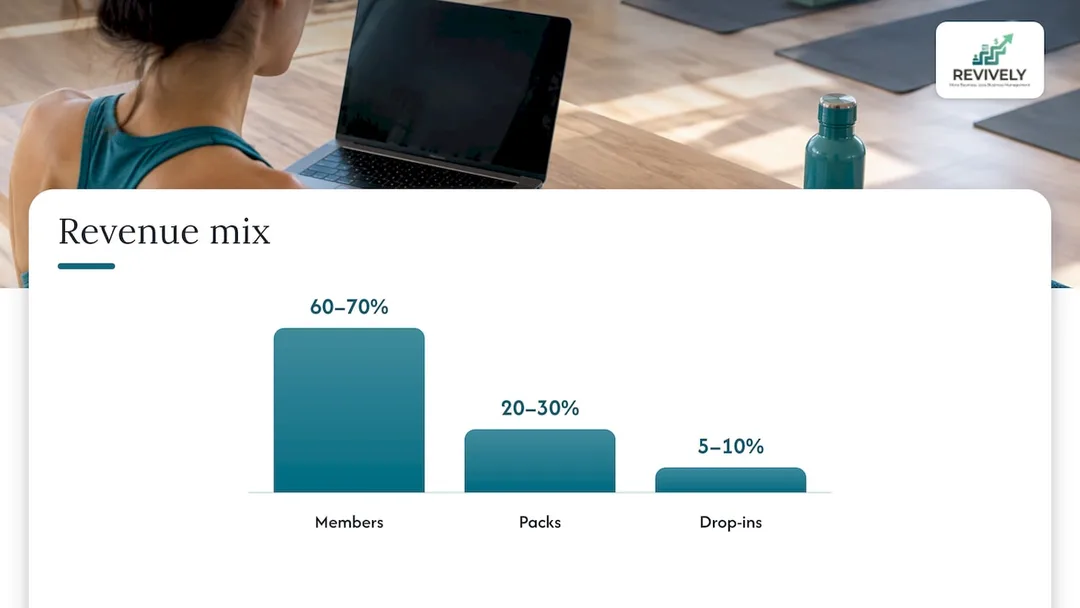
- Packs for Acquisition, Memberships for Retention: As DanceStudioJournal highlights, class packs are your entry point, while recurring memberships are your loyalty engine. Aim for a revenue mix where members account for 60-70% of your income.
- Roll Out the Welcome Mat: Always offer a low-risk introductory offer. A $45 three-class pass or a $65 21-day unlimited intro (like Dance Dynamics) is a brilliant way to turn a curious visitor into a regular.
Family & Group Pricing
Families are a special case. You don't always need a separate, complex group membership. A simple sibling or multi-class discount often suffices. 100% Dance offers 10% off the total for families enrolling in more than one class per week. Keep it straightforward, and your families will thank you.
The Numbers Game: Pricing You Can Defend
Stop guessing. Start with your actual costs, then test against your local market. This isn't just theory; it's the bedrock of sustainable studio operations.
- Total Your Monthly Overheads: This includes rent, utilities, your studio management software (like Revively!), insurance, marketing, and, critically, instructor pay. Don't miss a single cent.
- Calculate Your Available Spots: Multiply your total classes per month by the maximum student capacity per class.
- Apply a Realistic Fill Rate: This is where many studios over-optimise. Don't use your best-ever class. Use your average attendance. If you're just starting, aim for a conservative 70-75%.
- Divide & Conquer: Your total monthly costs divided by your realistic filled spots gives you your true cost per booked spot. Your pricing for every single product (casual, pack, membership) must sit above this figure.
An Illustration: Putting the Numbers to Work
Imagine a studio running 40 classes per month with 16 spots each, totalling 640 potential spots. At a realistic 70% fill rate, that's 448 filled spots. If your monthly operating costs are $14,000, then each filled spot costs you approximately $31.25.
- A $30 casual drop-in would lose you money.
- A class pack where the per-class cost is $25 would mean you're running at a loss.
Your pricing needs to land above that $31.25 per class, or you need to drastically improve your fill rate. The maths doesn't lie.
Crucial Pricing Caveats
- Spots ≠ Members: Don't confuse physical spots with unique members. If your average member attends twice a week, 100 weekly spots support roughly 50 members, not 100. Size your membership tiers based on projected visits, not just maximum capacity.
- Unlimited Tier Scrutiny: Unlimited memberships depend heavily on consistent attendance and healthy utilisation rates. DanceStudioJournal's modelling shows a $250 unlimited tier can lose nearly 30% of its contribution margin if class utilisation drops from 50% to 35%. They recommend pricing unlimited at least 2.5 times your casual drop-in rate. Many successful Australian studios sit well above this minimum.
For a deeper dive into financial health, explore our guide on revenue per class. And to protect your core revenue, understand how to prevent class packs from undermining your memberships.
Don't Set and Forget: Regularly Review Your Prices
Prices aren't static; they drift out of date faster than you think. Your costs change, inflation bites, and your market evolves. Build a regular schedule for price reviews into your operational calendar.
Dragonfly Dance published its 2026 membership changes well in advance, candidly explaining that their previous pricing assumed members would stay for a full 12 months. When cancellations happened sooner, their prices became unsustainable.
The lesson here is profound: Document the core assumptions behind each price (e.g., expected term length, average fill rate, discount compared to drop-ins). The moment those assumptions stop holding true, it's time to adjust your pricing. Always communicate changes to your members early and in writing, explaining why the change is necessary.
Navigating the Red Tape: Australian Contract Terms & Billing Compliance
This is where many studios stumble. Recurring billing isn't just about collecting money; it's about robust, legally sound agreements that protect both you and your clients. Australian consumer law is strict, and ignorance is no excuse.
Consumer Affairs Victoria, reviewing health and fitness contracts, found minimum terms commonly ranging from three to 12 months. Crucially, they've identified certain automatic-renewal arrangements as potentially unfair and stipulate that members should receive reminder notices. While this guidance is from 2011 and specific to Victoria, it's a strong indication of the principles upheld across Australian state fair trading rules. Always consult a solicitor to review your terms and conditions before publishing.
Crucial Compliance Check: Your studio must ensure all client data, including booking histories and sensitive health intake forms, is stored securely within Australia. This is non-negotiable for adhering to the Australian Privacy Principles (APPs) and building client trust. Check your software provider's data residency policy.
On your sign-up page, make these points unambiguously clear:
- Minimum Term & Post-Term Action: What's the initial commitment, and what happens once it concludes?
- Cancellation Notice Period: Clearly state the required notice period in days.
- Freeze Rules: What are the terms for pausing a membership? Salsa Suave, for example, permits freezes of up to six months, which offers clients valuable peace of mind.
- Exclusions: Explicitly list anything not included in an "unlimited" membership (e.g., private lessons, workshops, performance teams).
- GST Inclusion: State clearly whether prices are inclusive of 10% GST.
And what about those mid-month joiners? Pro-rata charges can be a headache. Our guide to fair and compliant pro-rata billing outlines your options for Australian studios. For yoga-specific insights, don't miss our deep dive into pricing yoga classes in Australia.
Beyond the Desk: What Your Software Must Do
Your three-rung pricing ladder translates directly into three distinct billing and attendance tracking workflows. Relying on manual processes for any of these is a recipe for errors, lost revenue, and endless admin.
Your all-in-one spa booking software, multi-resource studio scheduling, or Mindbody alternative Australia solution needs to be purpose-built for the Australian market. It should:
- Automate Everything: Seamlessly process recurring payments for memberships and accurately deduct credits from class packs.
- Intelligent Scheduling: Manage a recurring class timetable with dynamic capacity limits and an intuitive client booking experience.
- Smart Waitlists: Automatically promote clients from the waitlist when a spot opens up, ensuring every class is full.
- Flawless Financial Reconciliation: Reconcile payments and automatically calculate 10% GST, then integrate directly with your accounting software for an audit-proof paper trail.
- Australian Data Residency: Crucially, your client data (including sensitive health intake forms) must be securely stored on servers located in Australia, ensuring full compliance with the Australian Privacy Principles (APPs).
Our overview of recurring class timetable software gives you a clearer picture of what this looks like day-to-day. If you're comparing systems, our guide to choosing membership software lists the essential questions every Australian studio owner needs to ask.
Our view on membership pricing
We built Revively around one idea: a studio should not need a separate tool for each product it sells. Memberships, class packs, and casual bookings are not disparate parts; they're one unified business. And they absolutely must live on one dashboard.
This unity is crucial for pricing, because your numbers only become truly powerful when they're all in one place. When memberships, packs, and casual bookings share a single, intelligent system, you gain immediate insight into which tiers fill your classes and which ones might be eroding your revenue. Stripe-powered memberships, flexible class packs, and waitlists that promote automatically are all part of the same platform.
What's more, our native, two-way Xero integration isn't just an add-on; it's a guarantee of 100% legal tax compliance. Automated mapping of tax codes, revenue accounts, and liabilities ensures your quarterly Business Activity Statements (BAS) are flawless and audit-proof, completely removing the headache of manual spreadsheet errors and giving you peace of mind.
Our advice is simple: price your ladder deliberately, with real numbers. Then, let your software do the heavy lifting, ensuring compliance, accuracy, and growth. You set the rules once, and Revively runs them.
Andreea
Run Your Ladder in Revively: Your Australian Command Centre
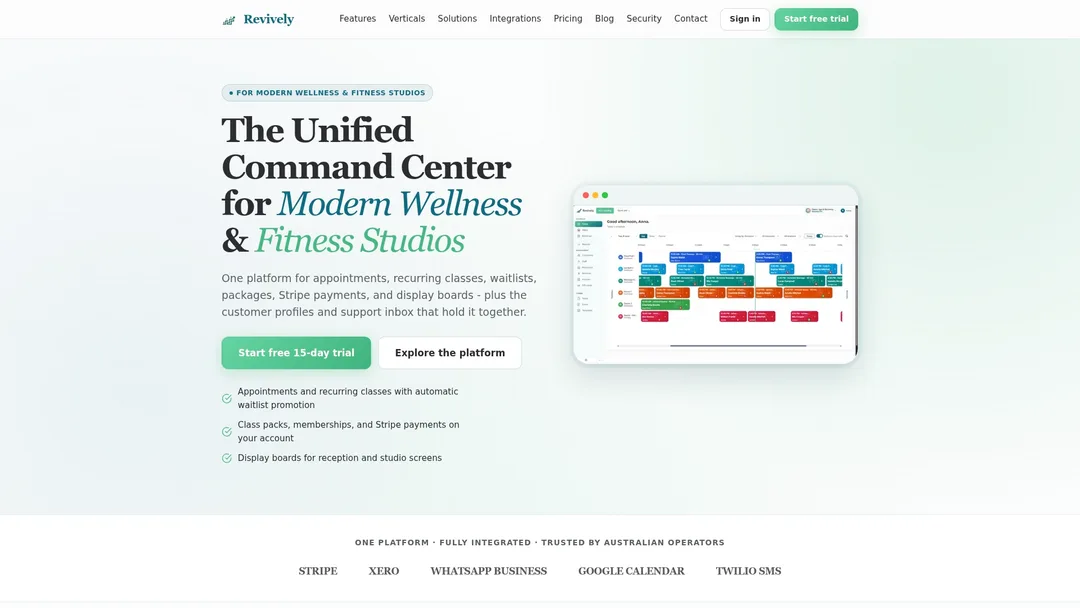
Revively is an Australian-made, unified cloud command centre (CRM + multi-resource scheduler) designed for wellness and fitness studios. We handle recurring memberships, class packs, waitlists, and digital intake forms in one intuitive dashboard, complete with industry-leading Xero integration for GST reconciliation and BAS accuracy.
Beyond seamless pricing and scheduling, Revively guarantees Australian data residency for all client information, fully complying with local privacy principles. This means your client data, booking histories, and sensitive health intake forms are stored securely within Australia.
The Growth plan starts at $99 AUD per month, with rolling memberships costing $15 AUD per month per 50 active members. See every plan on the Revively pricing page, or take a closer look at how our recurring classes and waitlists work.
FAQ: Your Quick Answers
How do I calculate a membership price?
Start by dividing your total monthly operating costs by the number of spots you realistically expect to fill (using your average attendance rate, not peak capacity). This gives you your cost per booked spot. Ensure each product on your pricing ladder sits above this figure, then cross-reference with local Australian studios.
How much should an unlimited membership cost compared with a casual drop-in?
While some international sources suggest at least 2.5 times the drop-in rate, successful Australian studios often charge significantly more. For example, Dance Dynamics lists a $30 casual class alongside a $240 fortnightly unlimited tier. The key is to test your price against your actual member attendance patterns to ensure profitability.
Should I sell class packs as well as memberships?
Generally, yes. Class packs serve a different purpose: they attract newcomers and suit clients with irregular attendance. Memberships, on the other hand, are for your dedicated regulars. Ensure your class packs have an expiry date to encourage usage and that their per-class price is kept above your membership rate to avoid cannibalising your core recurring revenue.
What does group pricing mean for Australian studios?
Group pricing, often called family or multi-class discounts, means offering a reduced rate for multiple individuals from the same household or for a single client enrolling in multiple classes. A common approach for Australian studios is a percentage off the total bill for families, like the 10% discount 100% Dance offers when a family enrols in more than one class per week.
Sources
- J.T. Dance Academy: memberships and pricing
- Dance On Newy: plans and pricing
- SoaR Dance Studio: pricing, packs and memberships
- Dance Dynamics: dance class pricing
- Salsa Suave: VIP membership
- Salsatown: pricing
- Cortés Dance: flexible plans
- Dragonfly Dance: membership and pricing changes
- DanceStudioJournal: unlimited class memberships
- 100% Dance: kids classes
- Consumer Affairs Victoria: unfair terms in health and fitness membership agreements
Recommended for Your Studio's Growth
Looking to further optimise your studio's operations and revenue? Dive into these related articles from Revively:
- Pricing Yoga Classes in Australia: Master Memberships, Payments & BAS Compliance
- Stop the Revenue Drain: Are Your Class Packs Undermining Your Memberships?
- Choosing Gym Membership Software: An Australian Studio's Guide to True Fit
- Drowning in Studio Admin? How Australian Studios are Mastering Memberships (and Their Weekends)