
Two-Way SMS for Studios: How It Works and How to Use It
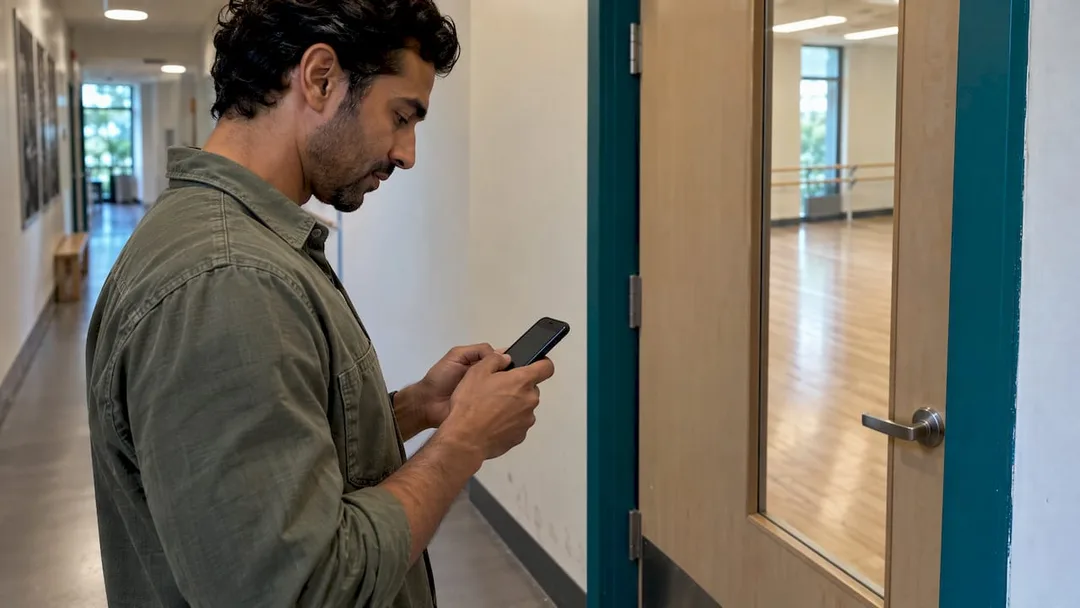
! Studio manager replying to a client text
Two-way SMS means you text a client and they can text back, with the reply landing in your business inbox instead of disappearing.
The daily chaos of running a wellness or fitness studio in Australia is relentless. You're juggling client bookings, last-minute cancellations, waitlist hopefuls, and a never-ending stream of questions. Your phone rings off the hook, emails pile up, and often, a crucial client message gets lost in the ether.
Imagine sending a class reminder, only for a client to reply, "Can I bring a friend?" or "My knee's playing up, can we reschedule my physio session?" And that reply... just vanishes. Into the digital void. That's the one-way SMS trap.
But what if every client text landed directly in your studio's unified inbox? What if you could turn a simple reminder into a dynamic conversation? That's the power of two-way SMS - a game-changer for spas, recovery centres, yoga/Pilates studios, clinics, and dance schools across Australia.
It means you text a client, and they can text back. Their reply doesn't disappear into their personal phone's abyss; it routes straight to your business, ready for a timely response. This isn't just about convenience; it's about closing gaps, reducing no-shows, and building a responsive, professional client experience.
For Australian studio owners, unlocking this conversational channel hinges on a few non-negotiables: a dedicated number that receives replies, a centralised system for staff to read and action them, and a clear internal process for who responds and how quickly. Get these right, and you'll transform your client communications from a one-way lecture to a flowing, efficient dialogue.
Quick Takeaway: Two-Way SMS Essentials
- One-way vs. Two-way: One-way pushes info; two-way allows replies directly into your system. If a client might reasonably want to reply, enable two-way.
- The Number Matters: Replies require a dedicated mobile number, not just a branded sender name. As ACMA advises, alphanumeric headers generally can't receive return messages.
- Australian Marketing Rules: Marketing texts need explicit consent, clear sender identification, and a functioning unsubscribe mechanism you honour within 5 working days. This is non-negotiable under the Spam Act 2003.
- Sender ID Registration (Coming Soon): From 1 July 2026, branded sender IDs must be registered in Australia. Messages from a standard phone number are exempt.
- Reply = Promise: If you switch on two-way SMS, be ready to reply. Define who owns the inbox and set clear response times. An unanswered reply is worse than no reply at all.
Table of Contents
- What two-way SMS is and how it works
- Two-way versus one-way SMS
- Where two-way SMS helps in a studio
- What you need to set it up
- Australian rules for business texting
- A practical two-way routine for your studio
- Our perspective
- Run two-way SMS from your studio dashboard
- FAQ
- References
What Two-Way SMS Is and How It Works
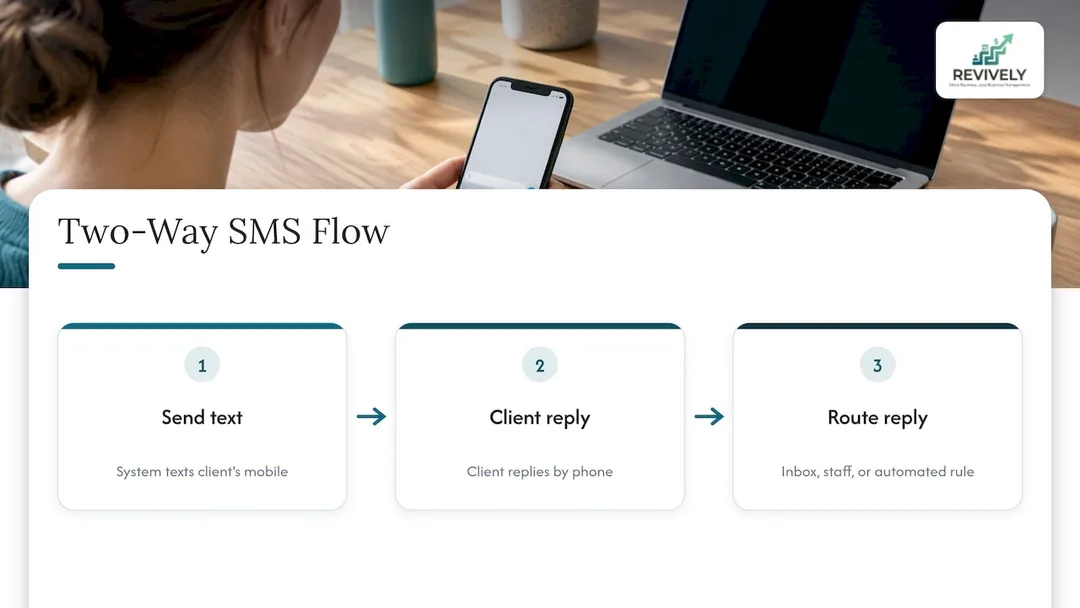
Think of two-way SMS as a digital conversation that happens seamlessly behind the scenes. It's a three-step dance:
- Your System Sends: Your studio's scheduling or CRM software dispatches an outbound text to your client's mobile phone (e.g., a booking reminder).
- Client Replies: Your client taps "reply" on their phone and sends their message back.
- Platform Receives & Routes: Your system captures that reply and directs it to a shared inbox, a specific staff member, or triggers an automated workflow.
As LINK Mobility explains, both the outbound ("mobile-terminated") and inbound ("mobile-originated") messages happen within the same thread. For you, this simply means context.
The secret sauce is the sender. A dedicated mobile number can both send and receive. A branded name (like "Revively Studio") looks slick, but it's a one-way street - it can push messages out but has no return address. The number is everything.
Critically, a proper two-way system provides a threaded inbox. Your team sees the entire conversation history: what was sent, what the client said, and when. No more asking clients to repeat themselves or digging through individual staff phones for context. It keeps everyone on the same page, saving time and preventing miscommunication.
Two-Way Versus One-Way SMS: The Crucial Difference
One-way SMS is a megaphone. You broadcast information: "Your 6 pm yoga class is confirmed." If the client replies, that message goes nowhere. Two-way SMS is a walkie-talkie. You send, they reply, and the conversation continues.
Most Australian studios need a mix of both.
| Message Type | Best For | Example |
|---|---|---|
| One-Way | Pure information, high-volume announcements | "Your 6 pm class is at Studio 2, remember your mat." "Holiday hours update: we're closed December 25th." |
| Two-Way | Anything requiring client input, decision, or question | "Reply YES to confirm your appointment." "Can we move my massage to Thursday?" "Is this class suitable for beginners?" |
Here's the simple test: if there's any chance a client might reasonably want to ask a question, confirm, or change something, give them the option to reply. If a reply is truly pointless (and you've made that clear in your booking terms), then a one-way notice is fine.
Where Two-Way SMS Rescues Your Studio Operations
Two-way SMS isn't just a nice-to-have; it's an operational lifesaver for busy Australian studios.
Appointments and Treatments: Plugging Scheduling Gaps
For spas, clinics, and recovery centres, every minute is money. A tight schedule of treatment rooms, therapists, and equipment slots needs to run like clockwork. A client who can simply reply "Can we move my float session to Thursday?" saves a phone call for both sides and frees up your front desk. Many appointment businesses use reply keywords to confirm or cancel, and a freed-up slot can be immediately offered to someone waiting. Dive deeper into SMS confirmations that cut no-shows for more insights.
Group Classes and Waitlists: Turning "Empty Spot" into "Booked Out"
Yoga, Pilates, and dance studios constantly battle the dreaded last-minute cancellation. An empty spot in a popular class isn't just an inconvenience; it's lost revenue. A late cancellation is only a true loss if that spot stays empty.
Pair a fast, two-way reply channel with an automated waitlist, and watch those gaps close at lightning speed. Your client texts "Can't make 7 pm," your system releases the spot, and the next person on the waitlist gets an instant offer. Learn how to turn your waitlist into guaranteed bookings and explore how recurring classes and waitlists work seamlessly within Revively.
Enquiries, Aftercare, and Intake: Streamlining Client Journeys
New clients often ask the same questions: "Which class is best for beginners?" "What should I wear for reformer Pilates?" "Is this facial treatment right for my sensitive skin?" Two-way SMS provides a quick, convenient channel for these common enquiries. Beauty and wellness businesses also leverage texts for follow-ups, treatment questions, and aftercare instructions.
For health-related questions or sensitive details, always direct clients to a secure, digital intake form rather than collecting personal health information via unencrypted SMS.
What You Need to Set It Up (The Right Way)
Implementing two-way SMS isn't rocket science, but it demands a robust system and a clear internal strategy.
- A Reply-Capable Number: This is foundational. You need a dedicated mobile number that your clients will recognise and, crucially, can text back to. No generic sender names that disappear into the ether.
- A Centralised Inbox: Where do replies land? A shared, unified inbox (ideally integrated with your client management system) is vital. This ensures every staff member with appropriate access can see the full conversation history, preventing fragmented communication.
- Smart Opt-Out Handling: Compliance is key in Australia. Your system must process "STOP" or "UNSUB" keywords automatically, without manual intervention, ensuring you honour unsubscribe requests promptly and legally.
- A Person and a Process: This is where many studios stumble. If a client texts and hears nothing for days, the two-way channel actually harms trust. Assign clear ownership for monitoring the inbox, define operating hours, and have a plan for after-hours replies. Consider an auto-reply that sets expectations (e.g., "Thanks for your message! Our team replies Mon-Fri, 9 am-5 pm AEST."). Use automation for routine answers, freeing your staff to focus on conversations requiring human judgment.
Australian Rules for Business Texting: Stay Compliant, Avoid Penalties
Operating a business in Australia means playing by the rules, especially when it comes to client communication. Under the Spam Act 2003, any commercial electronic message - including an SMS that promotes your studio, goods, or services - comes with conditions. This covers everything from your new term launch to a membership offer or a special class pack.
For any marketing messages, the ACMA sets out the core requirements:
- Consent is King: You must have consent before sending marketing messages. Both express (e.g., ticking a box) and inferred (e.g., existing client relationship) consent are recognised. Keep clear evidence of how and when consent was given.
- Identify Yourself: Clearly state who is sending the message and include accurate contact details.
- Easy Unsubscribe: Provide a clear, free-of-charge (beyond normal message costs) method to unsubscribe. This method must work for at least 30 days, shouldn't require extra personal information or an account login, and you must action all requests within 5 working days.
Size doesn't exempt you. ACMA research highlights that even one message promoting goods or services must comply. Disturbingly, 44% of SMEs sending SMS weren't always offering an unsubscribe option. The penalties are real: ACMA's investigations page records a staggering AUD 3,960,000 infringement notice against a finance company for breaches related to marketing texts.
A purely service message (e.g., "Your 6 pm class is confirmed") is different from a promotional one. But the moment a text also advertises something, treat it as marketing. For a plain-language guide tailored to small businesses, this SMS marketing law compliance guide is a good resource. We also cover studio-specific scenarios in our own ACMA compliance guide.
Sender ID Registration: What You Need to Know by 1 July 2026
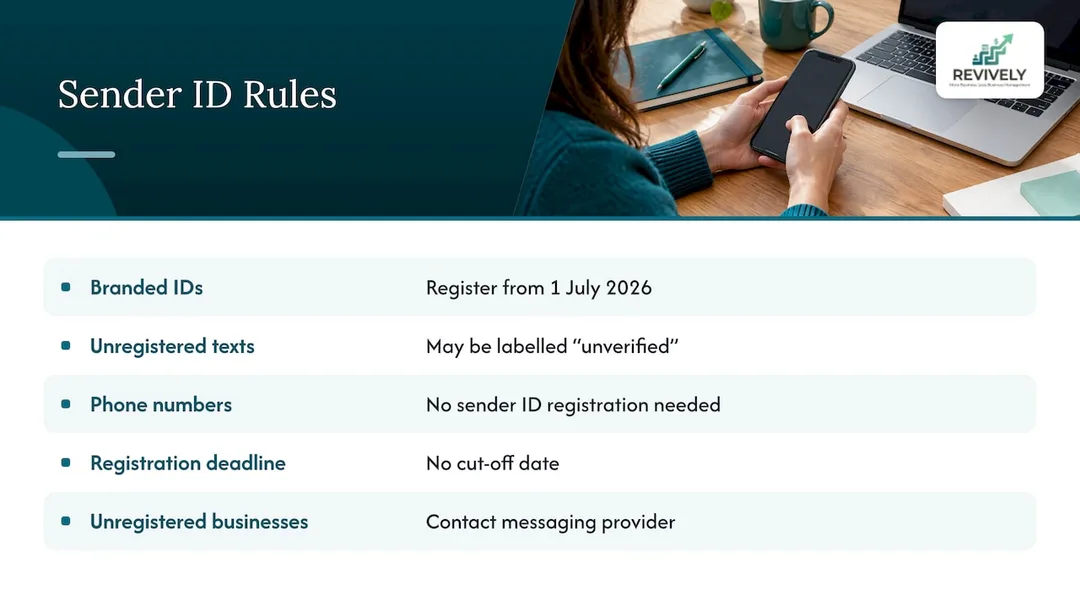
If your texts currently display your studio's brand name (e.g., "Revively Yoga") instead of a phone number, listen up. From 1 July 2026, Australian businesses using branded sender IDs must register them on the SMS Sender ID Register. Unregistered branded messages risk being flagged as "unverified" or potentially blocked by carriers.
However, if you're sending from a standard phone number, you don't need to register a sender ID. This offers a simpler, compliance-friendly path for many studios, especially as it enables two-way communication. ACMA notes there's no cut-off date for registration, but if you rely on branded SMS and haven't registered, contact your messaging provider now.
A Practical Two-Way Routine for Your Studio: Keep It Tight, Keep It Simple
Don't overcomplicate it. Start small, get it right, then expand.
- Pinpoint Key Interaction Points: Focus on the moments that genuinely benefit from a reply. Booking confirmations, waitlist offers, and reschedule requests are the obvious, high-impact choices.
- Craft Clear, Actionable Prompts: Tell clients exactly what to reply. "Reply YES to confirm," or "Reply CANCEL to opt out of this class." One action per message.
- Define Inbox Hours: Communicate when your team monitors replies. Embed this in your auto-reply and your studio's booking terms.
- Assign an Owner (and only one!): During each shift, designate one person responsible for reading and responding to SMS messages. Everyone else leaves it alone to avoid crossed wires.
- Integrate with Your Cancellation Policy: If a client cancels via text within your cut-off window, ensure it follows the same rules as any other cancellation. Our guide to automated cancellation policies can help you set this up seamlessly.
- Maintain Flawless Records: Crucially, store consent, communication history, and opt-outs against the client's profile in your CRM, not on someone's personal phone. This ensures compliance and provides a complete audit trail.
This structured approach works wonders, especially when combined with automated reminders. See how smart automation rescues client reminders, allowing your staff to focus on meaningful conversations instead of sending the same text twenty times a day.
Our Perspective: The Revively Difference
Most Australian studios don't have a texting problem. They have a scattered-tools problem. Reminders ping from one system, bookings live in another, and client replies? They land on someone's personal phone, or worse, into the digital abyss. This fragmented approach creates confusion, inefficiency, and compliance headaches.
We built Revively to solve this. Our vision is a unified cloud command centre where your schedule, waitlist, payments, client messages, and vital compliance data all live on one intuitive dashboard. This holistic approach is absolutely critical for effective two-way SMS. A client who texts "Can I move to Friday?" should be one click away from their full profile, their class pack, and your Friday timetable. Context is everything.
Beyond just messaging, we understand the sacred trust of client data. That's why Revively stores all your client profiles, booking histories, and sensitive health intake forms right here in Australia, fully complying with the Australian Privacy Principles (APPs). No overseas servers, just local, secure data management you can trust.
And for the numbers side of things, Revively natively handles 10% GST calculations across all your casual classes, memberships, and multi-resource packages, automatically issuing legally compliant Australian Tax Invoices. Plus, our 100% legal Xero integration ensures flawless, audit-proof Business Activity Statements (BAS) through automated two-way mapping of tax codes and revenue, wiping out those manual spreadsheet headaches.
Our approach is simple: use a dedicated number for client messages, keep one-way notices for routine info, and centralise all conversations (chat, SMS, email) in a single support inbox. Add automatic waitlist promotion, and a cancelled spot gets filled without a round of frantic phone calls. That's what we design for, and it's why we are laser-focused on empowering Australian spa, yoga, Pilates, and dance studios.
Andreea, Co-founder Revively
Run Two-Way SMS from Your Studio Dashboard with Revively
Ready to ditch the texting tangle and streamline your studio's communications? Revively gives you a dedicated custom SMS number for just $19 AUD per month, seamlessly integrated with your scheduling, class timetables, waitlists, memberships, and crucial Xero integration for GST compliance.
Plans start from $39 AUD per month for Solo, $99 AUD per month for Growth, and $199 AUD per month for Pro, with a free trial available. Compare them all on the Revively pricing page.
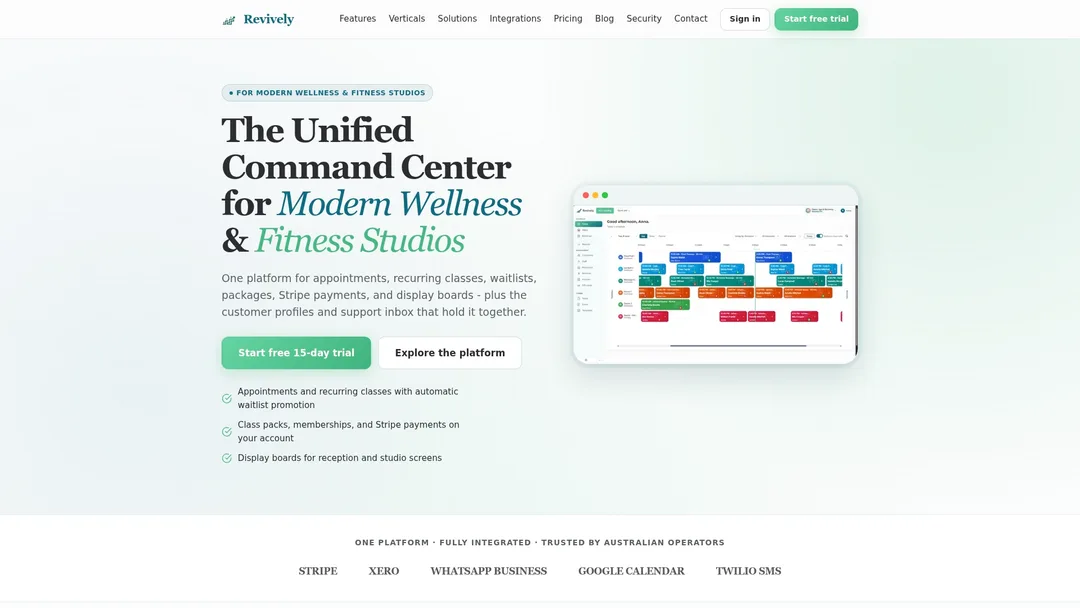
Try Revively with your own timetable and experience how replies, bookings, payments, and waitlists finally come together in one powerful, Australian-made solution.
FAQ: Your Two-Way SMS Questions Answered
What exactly is two-way SMS?
Two-way SMS enables your business to send a text message and receive the client's reply directly into your system, maintaining a continuous conversation thread. This reply is routed to a shared inbox, a specific staff member, or triggers an automated response. Crucially, it requires a dedicated phone number capable of receiving messages, not just a branded sender name.
Is business texting legal in Australia?
Yes, business texting is legal in Australia, but it's governed by strict regulations under the Spam Act 2003. Any commercial message that promotes your business, goods, or services requires explicit consent from the recipient, clear identification of your business as the sender, and a functional, free unsubscribe method that you honour within 5 working days. These rules apply regardless of your business size.
Can I use my studio's name as the sender ID for texts?
While you can technically use your studio's name as a sender ID, it generally cannot receive replies, making two-way communication impossible. Furthermore, from 1 July 2026, branded sender IDs in Australia must be registered, or messages may be flagged as "unverified." Sending from a dedicated phone number avoids this registration step and enables full two-way functionality, which is often more beneficial for client engagement.
How quickly should my studio reply to client texts?
Setting clear expectations and consistently meeting them is paramount. Publish your SMS inbox hours, use an automated out-of-hours reply, and leverage automation for common questions. A reply that goes unanswered for days can severely damage client trust and negate the benefits of offering two-way communication. Aim to reply within your stated hours, treating text messages with the same priority as phone calls or emails.
References
- ACMA: Avoid sending spam
- business.gov.au: Promoting your business by email or text messages
- ACMA: Small and medium-sized businesses, marketing messages and unsubscribe rules
- ACMA: Investigations into spam and telemarketing
- business.gov.au: New rules for businesses sending text messages
- ACMA: SMS Sender ID Register goes live
- LINK Mobility: What is two-way SMS messaging for businesses
- SMS Everyone: SMS reminders
- Mobile Message: SMS for beauty and wellness businesses
- SMS marketing law compliance for small businesses
Recommended for Australian Studio Owners
- No More Ghosting: The Australian Studio's Guide to SMS Reminders That Actually Work (and Keep You Compliant)
- Navigating the SMS Minefield: Your Australian Studio's Guide to ACMA Compliance Without the Headaches
- SMS Confirmations for Appointments That Cut No-Shows
- Stop the Studio Scramble: How Smart Automation Rescues Your Client Reminders (and Your Sanity)