
Staggered Start Times for Studios: A Practical Roster Guide
! Two dance instructors exchange a class handover
Staggered start times mean your team starts and finishes at different times instead of all clocking on together.
It's 8:30 AM. Your 6 AM yoga instructor just clocked off, but the 9 AM front desk host hasn't arrived. The studio is buzzing with post-class chatter, new client enquiries are coming in, and your spa therapist is waiting for a client who's running late. Meanwhile, the mid-morning pilates instructor is already there, sipping coffee, while the room they need is still being prepped.
Sound familiar? This common chaos isn't a lack of effort; it's often a symptom of a roster built on rigid assumptions, not real-world demand. That's where staggered start times come in: a simple, powerful strategy to smooth out your studio's operational flow, enhance client experience, and keep your team productive - all while staying squarely within Australian workplace rules.
Forget the idea of everyone clocking on at 9 AM. Staggered starts mean your team arrives and finishes at different, demand-driven intervals. Think: a 5:30 AM arrival for the early bird yoga class, a 9:30 AM front desk shift for the mid-morning rush, and an 11:00 AM spa therapist start to gracefully fill those treatment rooms in sequence.
The result? Better coverage, seamless handovers, and no one twiddling their thumbs during quiet periods. This isn't just about efficiency; it's about creating a calmer, more profitable studio.
Why Your Studio Needs to Reconsider the Roster
Traditional rostering often forces square pegs into round holes. You open your doors early, close them late, and somehow expect an eight-hour shift to magically cover everything. Staggered starts flip that script, aligning your team's presence with actual client demand.

Here's why it's a game-changer for Australian wellness and fitness studios:
Extend Your Reach Without Extending Costs
A single, fixed shift simply can't cover a 5:30 AM to 8:30 PM trading day. Trying to stretch it leads to overworked staff or gaps in service. By strategically overlapping shifts, you can lengthen the period your service is available, ensuring someone is always available when clients need you most - without ballooning your labour budget.
Sync with Client Peaks, Not Arbitrary Hours
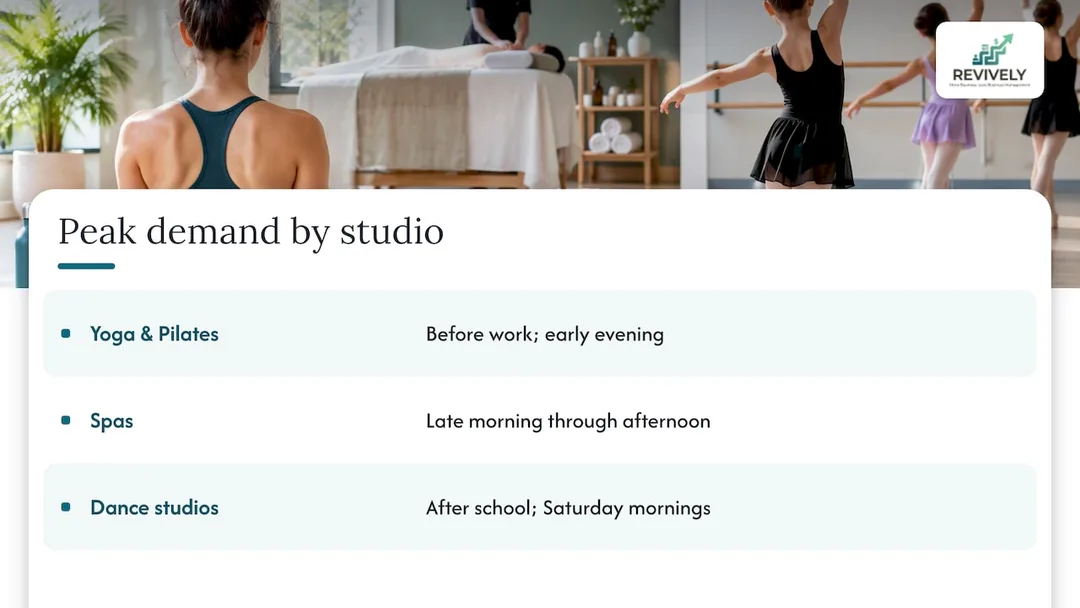
Ever notice that your yoga classes fill before sunrise and after sunset? Or that your spa bookings ramp up from late morning into the afternoon? Dance studios often see their busiest periods after school and on Saturday mornings. Staggered starts allow your team's availability to mirror these natural demand patterns, rather than forcing a square 9-to-5 that leaves you overstaffed during lulls and understaffed during surges.
Boost Team Morale and Retention
Life happens outside the studio. Instructors with school drop-offs, therapists managing family commitments, or staff with second jobs often value flexibility above all else. Offering earlier or later starts can be a powerful perk, helping you attract and retain top talent who might otherwise struggle with conventional hours. It shows you understand their reality, not just the roster grid.
Master the Art of the Handover
That awkward moment when one staff member bolts out the door as another arrives, leaving a trail of unanswered questions? Gone. When shifts overlap for a defined period, the outgoing team member can brief the incoming one on everything: urgent client notes, late arrivals, room issues, or even just the mood of the studio. This isn't just polite; it's critical for continuity and a seamless client experience.
The Practicalities: What to Watch Out For
While the benefits are clear, staggered starts aren't a set-and-forget solution. There are considerations, especially for smaller studios, that need proactive planning. As the ILO material notes, potential downsides include shorter periods when all workers are present and extra administration.
Team Meetings Become a Strategic Move
If everyone's on a different schedule, impromptu team huddles become a logistical nightmare. You'll need to deliberately schedule regular team meetings during your overlap period, or even outside of usual hours (with appropriate compensation and notice, of course), to ensure everyone stays on the same page.
Fostering Connection Across Shifts
When staff rarely cross paths, maintaining team cohesion can be a challenge. As HR providers like Breathe highlight, handovers and meetings get more complicated. A shared communication channel (like a team messaging app) and intentional social events can help bridge the gap. Remember, a connected team is a committed team.
The Admin Load: Where Spreadsheets Break
This is often the biggest hurdle for studios. More start times, more instructors, multiple rooms, equipment, cleaning buffers, waitlists, and client preferences - try tracking that across shared spreadsheets or clunky legacy systems. It quickly devolves into a game of whack-a-mole, where clashes are inevitable, and human error reigns supreme.
In our experience working with Australian wellness studios, the concept of staggered starts is almost universally loved. The execution? That's where most traditional tools fall apart. You need a system that thrives on complexity, not one that collapses under it.
Building Your Staggered Roster from the Ground Up
Don't guess; use data. The first step to an optimised roster is to understand your studio's rhythm. Pull your booking data from the last few months and map out client activity hour-by-hour.
Here's a structured approach to building your roster:
- Map Demand by Half-Hour: Identify when clients are arriving, checking in, making phone calls, responding to messages, and when rooms/resources are in use and need turnover.
- Define Start Waves: For most small to medium studios, two or three distinct start waves are sufficient (e.g., Early, Mid, Late). Each wave should clearly address a peak demand period.
- Establish Overlap: Identify a "core period" where all or most of your team is present. The ILO offers a clear example: shifts from 7:30 to 15:00 and from 10:30 to 18:00 create a 4.5-hour core period from 10:30 to 15:00. This overlap is crucial for meetings, training, and seamless handovers.
- Assign Waves with Preference: Start by asking your team about their preferred shifts. Where preferences collide, consider seniority or a fair rotation system.
- Trial and Refine: Implement the new pattern for 4-6 weeks. Monitor waitlist lengths, late cancellations, overtime, and gather staff feedback. Be prepared to adjust.
If you run workshops or special events, your community event ticketing data can offer valuable insights into demand patterns, helping you staff effectively before committing.
Example: A Day Spa's Seamless Day
Imagine a day spa with three treatment rooms and one sauna, open from 8:30 AM to 6:30 PM.
| Role | Start | Finish | Primary Responsibilities |
|---|---|---|---|
| Reception Host 1 | 8:00 AM | 4:00 PM | Opening, morning check-ins, bookings, initial enquiries |
| Reception Host 2 | 10:30 AM | 6:30 PM | Midday peak, afternoon bookings, closing duties |
| Therapist A | 8:30 AM | 4:30 PM | Morning treatments, early afternoon bookings |
| Therapist B | 10:00 AM | 6:00 PM | Midday to evening treatments, covering peak demand |
| Therapist C | 11:30 AM | 6:30 PM | Late-day treatments, ensuring a smooth close |
In this scenario, the entire team overlaps from 11:30 AM to 4:00 PM - a perfect window for quick handovers and a weekly team briefing. Treatment rooms are never left idle at opening, and clients aren't rushed out at closing. The crucial element here is a robust system that manages room cleaning buffers, sauna availability, and therapist schedules in one unified view.
Example: A Dynamic Pilates or Dance Studio
Consider a Pilates studio with 6:00 AM and 6:30 AM reformer classes, followed by mid-morning and then 5:30 PM and 6:30 PM evening sessions.
- Early Wave (5:30 AM - 1:30 PM): Opening front desk, early morning instructors, class setup.
- Middle Wave (9:00 AM - 5:00 PM): Admin, client enquiries, private sessions, and the crucial overlap with both early and late shifts.
- Late Wave (1:30 PM - 8:30 PM): Closing front desk, evening instructors, studio shutdown.
A dance studio would follow a similar logic, perhaps with a later centre of gravity for after-school classes, plus dedicated Saturday shifts for junior programmes. For foundational timetable structures, our timetable templates can provide a solid starting point before you layer in staggered shifts.
Navigating Australian Workplace Rules: Your Compliance Checklist
Changing employee hours isn't a casual decision; it's governed by Australian workplace law. This information is general guidance, not legal advice. Always consult your specific award or an employment specialist for tailored advice.
Flexible Working Requests
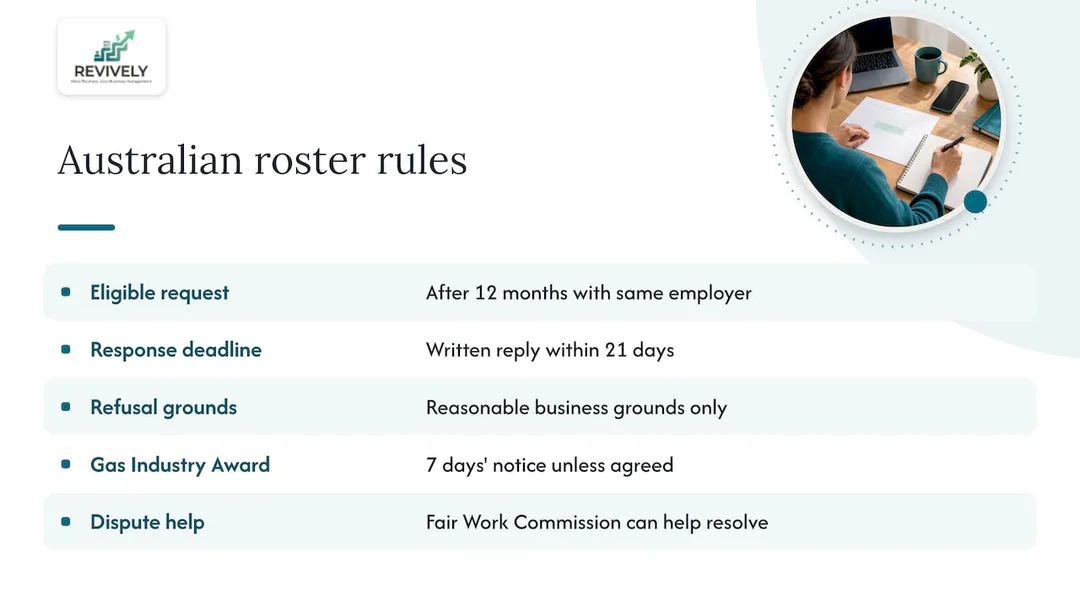
Under Australian law, eligible employees (typically after 12 months of service) can make a formal flexible working arrangements request, including changes to start and finish times. You must respond in writing within 21 days and can only refuse on reasonable business grounds. The Fair Work Commission offers resources to resolve disputes.
Awards and Consultation: The Non-Negotiables
Many Modern Awards that cover staff in wellness and fitness (e.g., Fitness Industry Award, Hair and Beauty Industry Award, etc.) contain specific clauses regarding rostering and changes to ordinary hours. Most will require you to consult with employees before making significant changes to their regular rostered start and finish times. Some awards even mandate a minimum notice period for roster changes. For instance, while not directly applicable to studios, the Gas Industry Award 2020 sets a 7-day notice period for roster changes, illustrating the general principle.
Always:
- Check the specific award that covers your instructors, therapists, and front-desk staff. Pay close attention to clauses on rostering, notice periods, and consultation requirements.
- Consult early and genuinely. Explain the "why" behind staggered starts (e.g., better client experience, improved staff well-being) and invite feedback.
- Document everything. Put new patterns and agreed changes in writing.
Do NOT impose a staggered start overnight. This is a recipe for unhappy staff, potential disputes, and compliance breaches. For a deeper dive into roster compliance, check our guide on Fair Work compliant scheduling for Australian studios.
Revively: Your Unified Cloud Command Centre for Seamless Staggered Rosters
"We've seen the same pattern across countless Australian wellness businesses: the idea of staggered starts clicks, but the spreadsheet implodes. Once you're juggling three start times, multiple instructors, specific rooms, that single sauna, and cleaning buffers, a shared calendar simply can't keep up. Someone finishes at 4 PM while a class they teach is still on the timetable. A treatment room is 'free' on paper, but still needs its crucial 15-minute turnover. A waitlist fills, while an available spot remains stubbornly hidden.
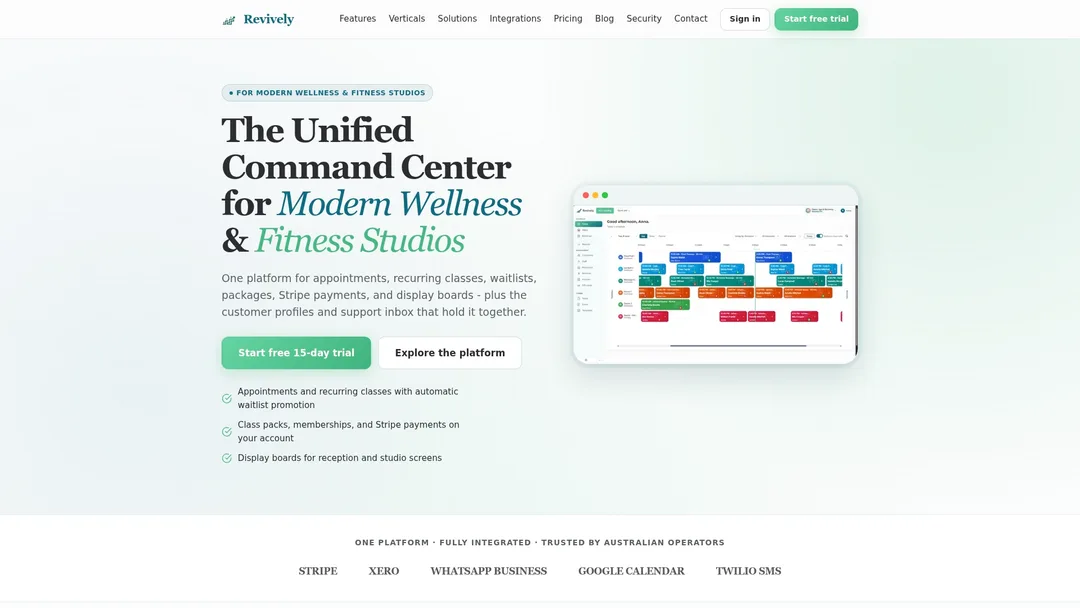
That's precisely why we built Revively as an all-in-one spa booking software and multi-resource studio scheduling solution. It's a single, intelligent dashboard where every piece of your operational puzzle connects: rooms, equipment, staff, cleaning buffers, recurring timetables, and waitlists that auto-promote. Your demand-driven start waves become visible, integrated, and effortlessly managed alongside the bookings they serve.
Our advice is clear: design your staggered pattern from demand, ensure a robust overlap for essential handovers, and then let purpose-built software hold the intricate details. This frees your team to do what they do best: focus on your clients, not wrestling with a broken roster.
Andreea, Founder & CEO, Revively"
Keeping Your Staggered Roster Running Smoothly, Week After Week
Implementing a new rostering strategy is just the beginning. Ongoing management is key to its success and the long-term health of your studio.
- Publish Early, Always: Provide your team with their rosters as far in advance as possible. This builds trust, allows for personal planning, and may be a requirement under your award.
- Guard the Overlap: That crucial overlap period isn't just a suggestion; it's the lifeline of your staggered system. Protect it fiercely for meetings, training, and detailed handovers. Avoid booking private sessions or additional classes during this time.
- Fair Rotation is Fundamental: If certain shifts (e.g., early mornings, late evenings) are less popular, ensure they're rotated fairly amongst the team on a pre-defined cycle. Transparency here is vital for team morale.
- Visualise the Day: A simple, clear display in your reception or staff room showing "today's classes, instructors, and available rooms" can be invaluable. It helps new arrivals quickly orient themselves and ensures everyone knows what's running.
- Review and Refine Monthly: Don't let your roster go stagnant. Regularly check key metrics: waitlist lengths, late cancellations, staff overtime, and direct feedback. If a "wave" is consistently quiet or overwhelmed, adjust it.
For an even deeper dive into smart scheduling, discover how a multi-resource studio scheduler like Revively eliminates double-bookings across all your critical resources.
Run Your Studio with Confidence on Revively.app
Revively is the Australian-made, unified cloud command centre (CRM + multi-resource scheduler) designed specifically for wellness and fitness studios - from spas and recovery centres to yoga/pilates studios, clinics, and dance schools. We understand the unique operational challenges you face.
Here's how Revively empowers your staggered roster and Australian compliance:
- Seamless Multi-Resource Scheduling: Effortlessly set up appointments, recurring class timetables, and workshops, automatically allocating staff, rooms, and equipment. Our system natively handles cleaning buffers, ensuring smooth transitions between bookings.
- Intelligent Waitlists: Don't miss a booking. Revively's waitlists auto-promote clients when a cancellation occurs, filling your spots without manual effort.
- Flawless GST & Tax Invoice Handling: Say goodbye to manual calculations and audit anxiety. Revively natively handles 10% GST calculations across all casual classes, memberships, and multi-resource packages. It automatically issues legally compliant Australian Tax Invoices to your clients, ensuring your books are always in order.
- 100% Legal Xero Integration for BAS Accuracy: Our deep, two-way integration with Xero ensures 100% legal tax compliance. Automated mapping of tax codes, revenue accounts, and liabilities directly into your Xero ledger guarantees that your quarterly Business Activity Statements (BAS) are flawless, audit-proof, and free from manual spreadsheet errors. This is a game-changer for your accountant.
- Australian Data Residency & Privacy: Rest easy knowing your sensitive client data, booking histories, and health intake forms are stored locally in Australia. We are fully compliant with the Australian Privacy Principles (APPs), offering you and your clients peace of mind.
Stop searching for Mindbody alternatives Australia that don't quite fit. Revively is built for your studio, your compliance, and your peace of mind.
Plans start from just $39 a month. A per-staff-seat model ($15/month per additional bookable staff) means Revively scales perfectly as you implement more sophisticated staggered start patterns.
See Revively pricing and start your free trial today.
Want your payments to flow as smoothly as your bookings? Explore invoicing with Stripe payments through Revively.
Frequently Asked Questions about Staggered Start Times
What exactly does "staggered start" mean in a studio setting?
It means your team members or groups start and finish their work shifts at different, pre-determined times throughout the day, rather than everyone clocking on simultaneously. For a studio, this typically translates into "waves" of staff - an early wave for morning classes, a middle wave for core hours and admin, and a late wave for evening sessions.
How is a staggered shift different from a split shift?
A staggered shift involves each team member working one continuous block of hours, but their start and end times are different from their colleagues. A split shift, on the other hand, means a single employee works two separate blocks of hours in one day, with a significant, unpaid break in between. Staggering optimises team coverage across the day; splitting affects an individual's work pattern.
Do staggered start times increase our payroll hours?
No, not inherently. Staggering aims to spread your existing labour hours more strategically across a longer operational day. The goal is to maximise coverage during peak periods without necessarily adding to your overall labour cost, within the limits of your award's hours, breaks, and penalty rules.
Can I change an employee's start time without their consent in Australia?
Not always, and it's best practice to consult. Many Australian Modern Awards require consultation before you make changes to an employee's regular rostered start and finish times, and some specify minimum notice periods. Always refer to the specific award covering your employees and seek advice from the Fair Work Ombudsman or an employment law specialist if you are unsure. Proactive communication and agreement are always the preferred approach.
Sources
- Staggered hours schemes, International Labour Organization
- Flexible working arrangements, Fair Work Ombudsman
- Gas Industry Award 2020 [MA000061], Fair Work Ombudsman
- How to manage staggered shift patterns, Breathe
- Community event ticketing
Dive Deeper: More Insights for Your Studio
- Stop the Roster Roulette: Your Studio's Guide to Bulletproof Instructor Schedules (and BAS-Ready Books)
- Stop the Clock Chaos: How Smart Studios Master Cleaning Buffer Times (10-60 Mins, Enforced)
- Stop the Studio Mayhem: How to Really Reduce Double Bookings (Without More Admin Headaches)
- Studio Scheduling Chaos? Your Resource Utilisation Report Holds the Key to a Calmer Roster